From Loss to Confidence: How a Bionic Hand Helped Mahendra Reclaim His Life

In 2006, Mahendra Pitale was leaving work like any ordinary day when his life changed forever. A bomb exploded on the Mumbai train he had just boarded. In the chaos and confusion, Mahendra knew right away—his arm was severely damaged. “I could tell just by looking at it,” he recalled. “This hand was not going to be saved.” Still, he held onto hope, keeping pressure on the limb until he reached the hospital.Later that night, doctors told him the truth: his arm would need to be amputated. “I told them, ‘Do what you think is best.’” When he woke up the next morning and saw the bandage where his hand used to be, the emotional weight struck. “At first, I was frustrated. I kept thinking, why did this happen to me?”
Facing Life After Amputation
Like many upper limb amputees, Mahendra faced not just physical recovery but the deep emotional and psychological impact of limb loss. “I stayed in the hospital for a month. People treated me differently. And I started asking myself—how will I ever work again?”
Before the accident, Mahendra had worked as a sculptor and designer, careers that required the use of both hands. “I was known for my design work, but suddenly, people looked at me as if I couldn’t do anything anymore.”
But Mahendra wasn’t ready to give up. He shifted his skills to digital design, learning software like AutoCAD and Photoshop. “If I couldn’t use my hands the way I used to, I’d use my mind instead.”
Discovering the Possibility of a Prosthetic Hand
A turning point came when a local newspaper published a story on Mahendra’s recovery. “They said, ‘He lost his hand—now he can’t even tie his shoelaces,’” he remembered. That headline stung. But it also lit a fire in him. “I told myself, I’m going to prove them wrong.”
Soon after, a team from a prosthetics company visited him in the hospital. They showed him videos of people using prosthetic hands, including myoelectric hands that responded to muscle signals. It was his first introduction to what a bionic hand could offer. “They told me I’d need to wait until my stitches healed—but from that moment, I knew I wanted one.”
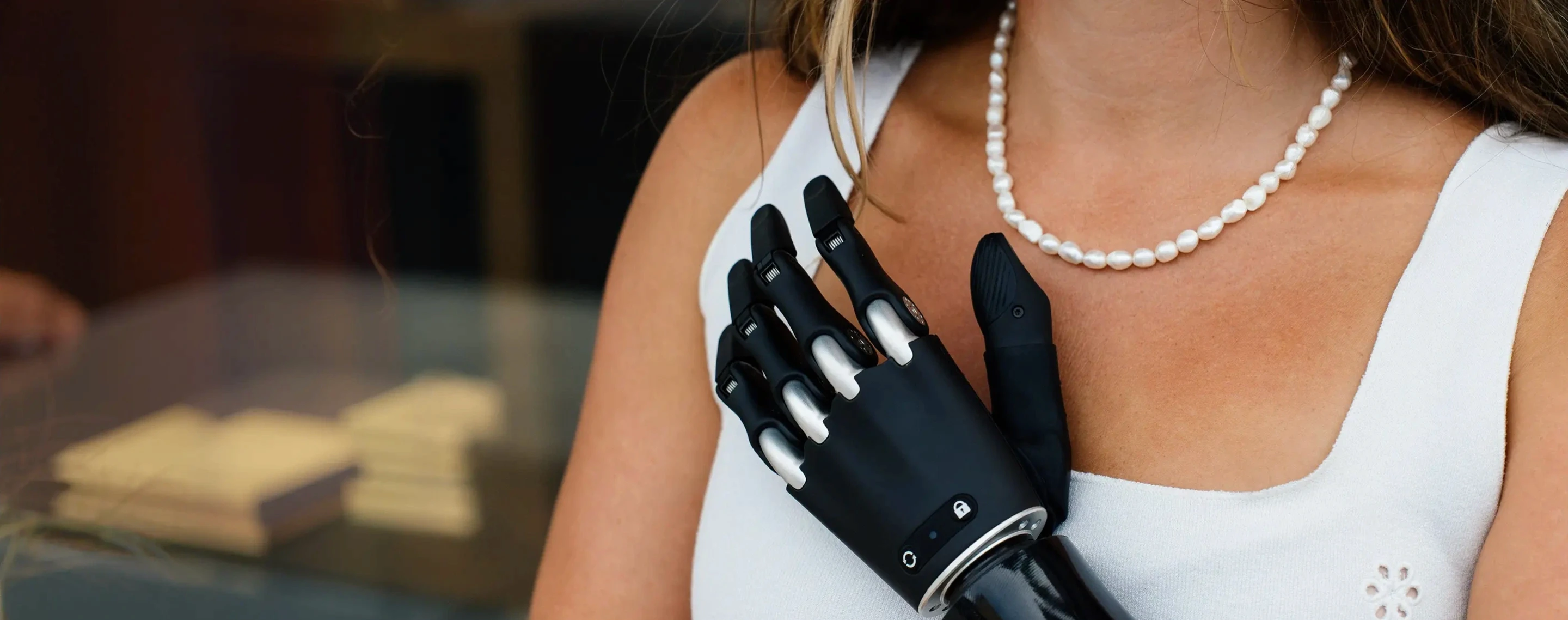
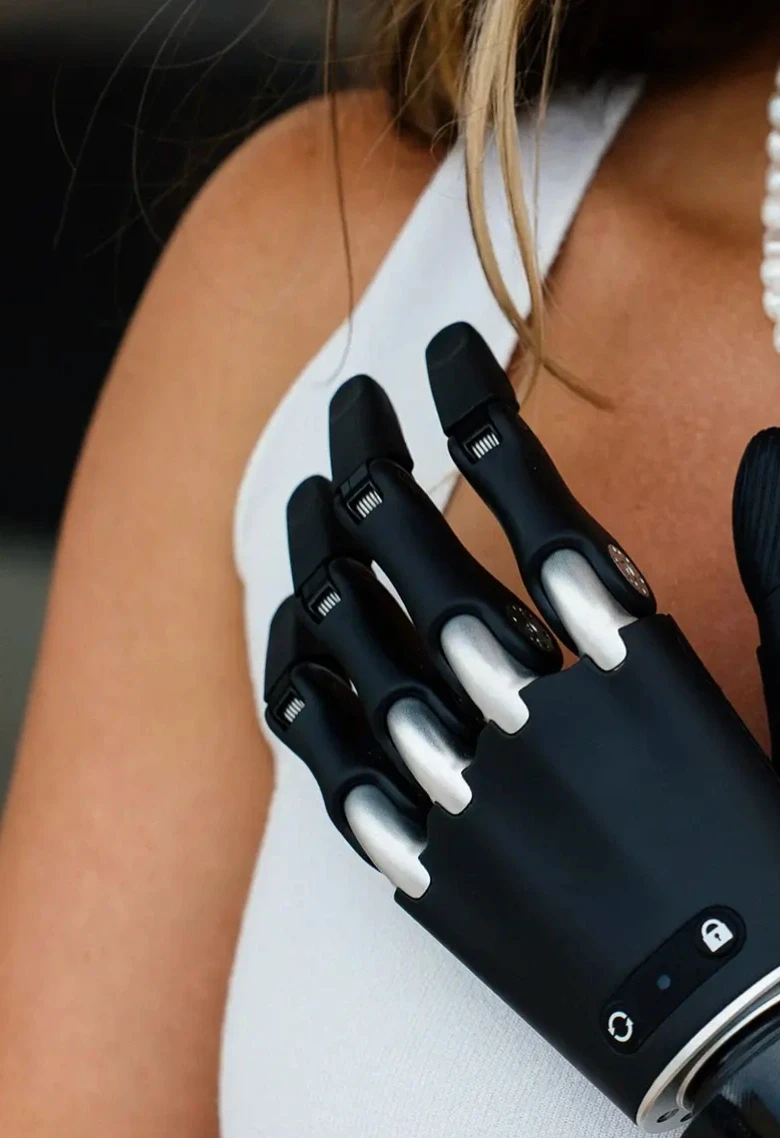
Thanks to support from local organizations, Mahendra began with a basic myoelectric prosthesis. It opened and closed, but had limited control. Eventually, through ongoing media exposure and personal perseverance, he was fitted with a bionic hand from Aether Biomedical.
A New Chapter with a Bionic Hand
“When I first got the bionic hand, it felt completely different from what I had used before,” Mahendra said. “It had grip patterns I had only dreamed of—enough control to shake hands without squeezing too hard, even to hold an egg without breaking it.”
It wasn’t just about what the hand could do—it was about what it gave back. Confidence. Freedom. Identity.
“Before the bionic hand, I had lost interest in many things. I gave up riding my bike. I stopped practicing archery. I didn’t think I’d be able to do those things again.” But with the new prosthesis, Mahendra gradually reintroduced the activities he loved into his daily life. “Now, I ride long distances, even to Goa. I’ve done rifle shooting. I go on marathons. I’ve even acted in films.”
Confidence in Every Grip
Mahendra now proudly wears his bionic hand in public and feels no need to hide it. In fact, it’s the opposite. “I wear T-shirts because I want people to see it,” he said. “Many amputees feel they need to hide, but I want to show what’s possible. This bionic hand changed my life—and if it helped me come back, it can help others too.”
He regularly speaks with other amputees over video calls, sharing how the prosthetic works and showing what it allows him to do. “I tell them, don’t lose hope. There’s a hand out there that can help you live again.”
For Mahendra, this journey—from trauma to technology, from amputation to action—has been about much more than recovery. It's about reclaiming possibility. And it’s proof that, with the right tools and mindset, life after limb loss can be just as full as life before.
{{cta('ef64e4aa-658d-432e-b537-d707b72991fa')}}

Read On
See Zeus in action across clinical settings worldwide