Aether MyoSense EMG Control for Bionic Hand Systems

For a bionic hand to respond to a user’s intent, the prosthetic system needs a reliable way to detect and translate voluntary muscle activity.
Aether MyoSense is Aether Biomedical’s dual-channel electromyography (EMG) signal acquisition and processing system, designed to turn skeletal muscle contractions into proportional electrical control signals for compatible upper-limb prosthetic devices.
MyoSense is not a prosthetic hand or a complete bionic arm. It is an external control device used with appropriate upper-limb components to form a complete arm prosthesis. Its role is distinct but essential: it provides the connection between the patient’s muscle activity and an electronically controlled end device, whether the fitted system includes a prosthetic bionic hand, gripper, wrist rotator, elbow, or another compatible component.
This control pathway allows a compatible end device to receive an electrical signal proportional to the patient’s voluntary skeletal muscle contraction.
The device is intended for fitting by qualified and certified clinicians or prosthetists. Through dual-channel EMG measurement, adjustable signal settings, skin-contact assessment, compatibility with upper-limb prosthetic components, and connection to the Aether Digital Platform (ADP), MyoSense gives clinicians practical tools for configuring prosthetic control around the individual patient.
What is Aether MyoSense?
Aether MyoSense amplifies signals generated by voluntary skeletal muscle contractions using surface electromyography. It processes those signals and delivers an electrical output proportional to the detected muscle activity, allowing the patient to control a compatible prosthetic end device.
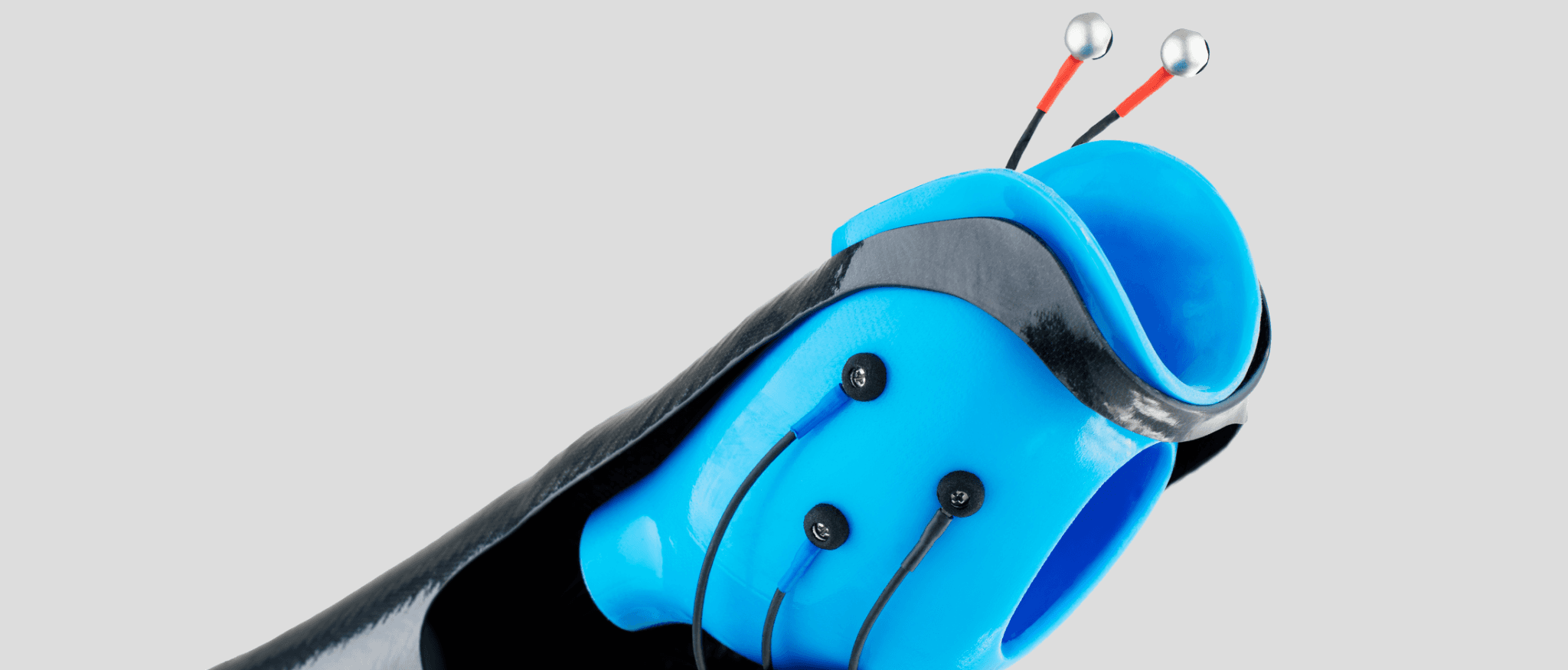
The device has two independent EMG measurement channels. Each channel uses a pair of differential electrode inputs, while a fifth reference electrode supports proper system performance. Together, these inputs capture muscle activity and produce two separate analog control signals.
MyoSense is supplied in one dual-channel variation. It includes two 15 cm universal 3-pin connector cables and 25 cm dome electrode leads. The main unit measures 50 mm by 17.5 mm by 7 mm.
How does MyoSense support robotic hand control?
MyoSense supports robotic hand control by converting voluntary muscle contractions into electrical signals that a compatible prosthetic component can interpret. When the patient activates the selected muscle groups, the surface electrodes detect that activity. MyoSense processes the input and sends a corresponding 0 V to 5 V output signal to the connected device.
This proportional control method means the strength of the control signal reflects the level of voluntary muscle contraction. The quality of the result depends on appropriate patient selection, electrode placement, socket integration, device configuration, and clinical fitting.
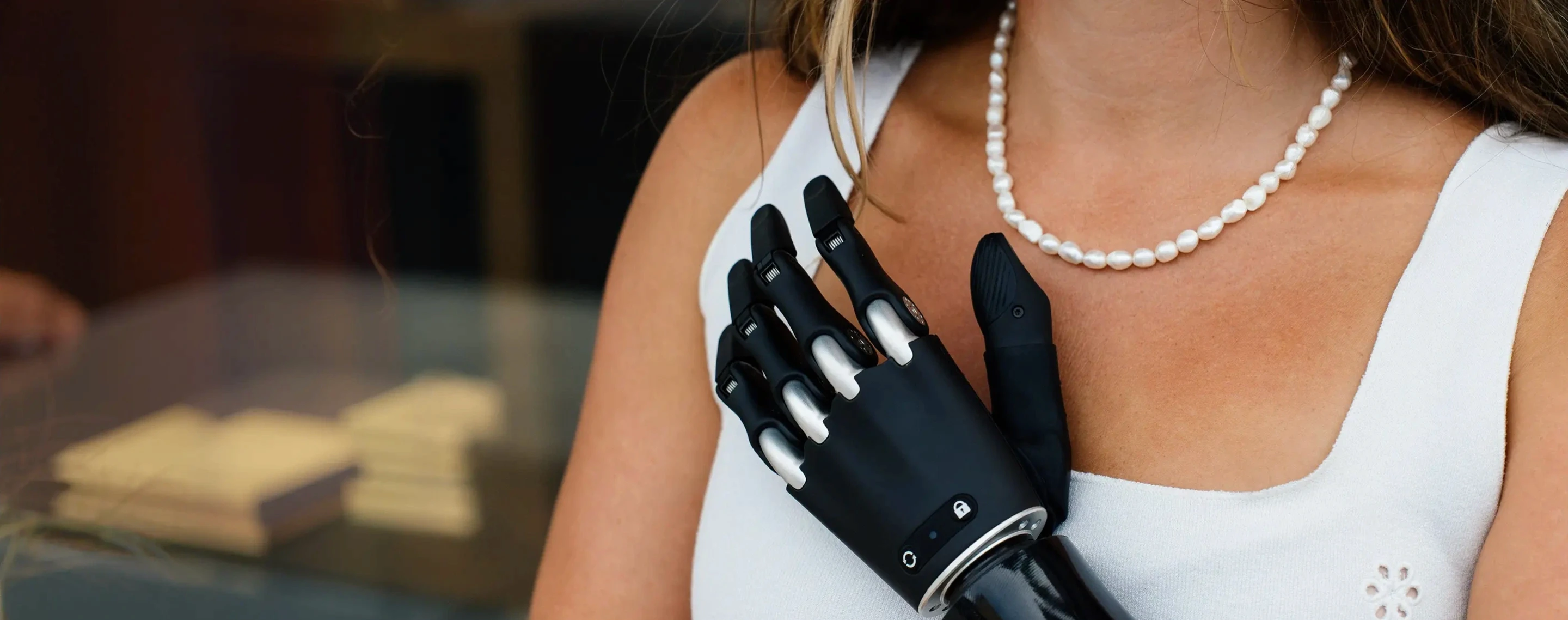
Within a bionic robot hand system, MyoSense is not the visible end device. It processes muscle activity and delivers control signals that allow a compatible hand or other upper-limb component to respond to voluntary muscle contractions.
Which MyoSense features support individualized fitting?
MyoSense provides several adjustable and monitoring features that clinicians can use to configure control for the individual patient.
Digitally adjustable gain
Clinicians can adjust gain to accommodate the patient’s individual level of voluntary muscle contraction. This helps align the control signal with the muscle activity available during fitting.
Adjustable signal smoothing
An adjustable control-signal filter can counter sudden spikes and tremors in the output. According to the product instructions, this filtering is designed to reduce unintended prosthetic device activation and help the patient maintain a steadier control signal while keeping control latency low.
Real-time skin-contact assessment
MyoSense assesses contact quality between each electrode pair and the patient’s skin. The system reports the result as Good, Medium, Poor, or No-contact. Clinicians can use this information as an indicator of electrode fit and the possible need for skin preparation.
If the system detects No-contact, it disables the corresponding output. This is designed to help prevent unintended movement when the prosthesis has been doffed.
Configuration through the Aether Digital Platform
MyoSense connects to the Aether Digital Platform through Bluetooth Low Energy for adjustment and tuning. Within the web application, qualified and certified prosthetists or clinicians can monitor EMG signals in real time, check electrode skin-contact quality, and adjust MyoSense feature parameters.
Configuration can take place in the clinic or remotely. A Bluetooth connection can be established for up to 10 minutes after the system powers on. Bluetooth switches off after 10 minutes of inactivity to conserve power, so the system must be power-cycled before another connection attempt when needed.
How does MyoSense fit into a bionic arm system?
MyoSense is designed for use with electronically controlled upper-limb prosthetic devices from Aether Biomedical and third parties, including hands, grippers, wrist rotators, elbows, and other compatible components.
The connected device must accept a 0 V to 5 V control signal, use a universal 3-pin connection, and be part of a setup that provides power loop-back for the control device.
Both MyoSense 3-pin connectors must connect to the same power source for the unit to power on. The system is compatible with 2S LiPo battery systems intended for upper-limb prostheses, with a nominal voltage of 7.2 V to 7.4 V and a fully charged voltage of 8.4 V to 8.6 V.
For a clinician planning a bionic arm configuration, these requirements provide a clear compatibility framework. Each complete system still needs to be assessed and fitted by qualified personnel using the instructions for all connected components.
Why do electrode placement and contact quality matter?
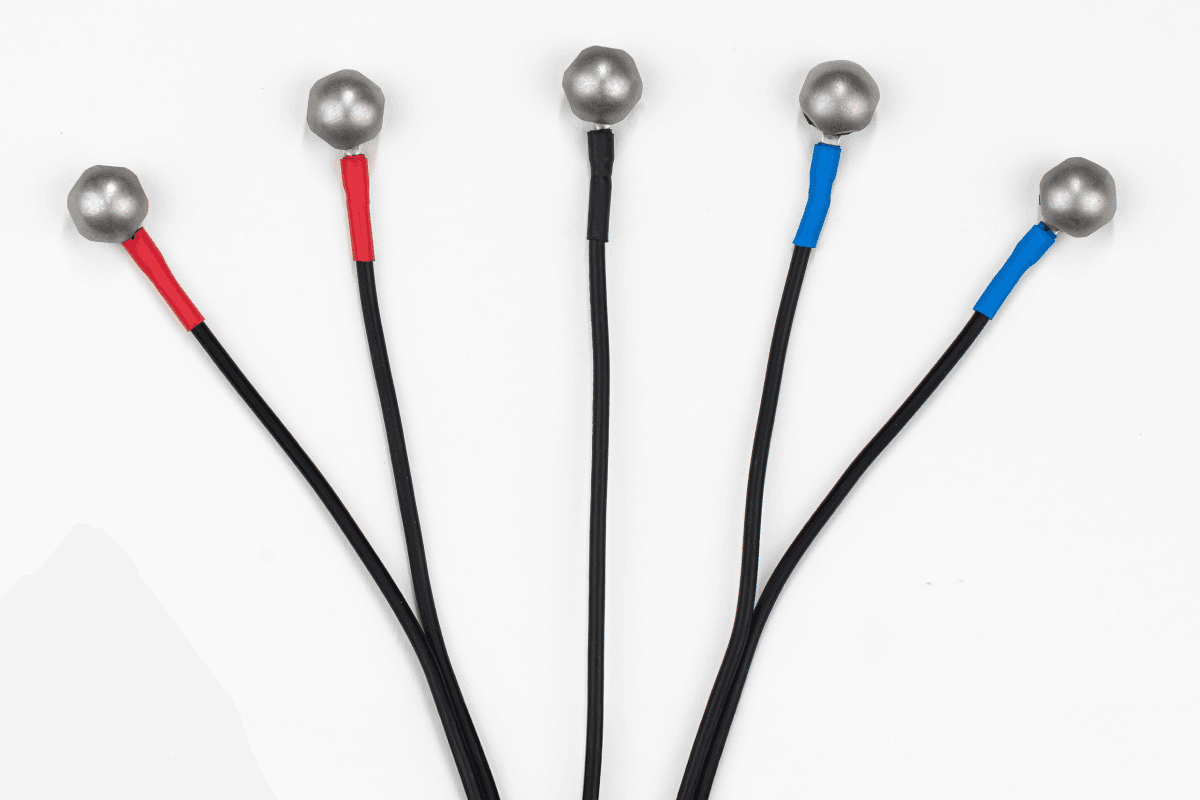
Electrode placement directly affects signal acquisition. MyoSense uses five dome electrodes: two differential pairs and one reference electrode.
The differential pairs should preferably follow the longitudinal axis of the limb and align with the muscle fibers. The reference electrode should sit near the differential electrodes, preferably midway between them, in an area with low muscle activity.
The instructions recommend avoiding bony prominences and sensitive tissue. They also suggest starting with approximately 30 mm between the electrodes in a differential pair. Wider spacing may generate stronger signals, but it can also increase crosstalk between channels.
MyoSense is intended for use with Coapt ControlSeal dome electrodes in standard or large sizes. Electrode installation, handling, and cleaning should follow the electrode manufacturer’s documentation.
These details are important because a robotic hand can only respond to the signals available to the broader prosthetic system. Careful electrode positioning, secure connections, and verified skin contact give the clinician a stronger foundation for configuration.
Who may be considered for MyoSense?
The instructions identify MyoSense for people with below-elbow or above-elbow amputation, shoulder or wrist disarticulation, or congenital upper-limb deficiency. It may be used for unilateral or bilateral amputation and is recommended for all genders from 14 to 75 years of age.
The patient must be able to generate sufficient voluntary muscle contractions for prosthetic control, understand the use and safety information, and apply that guidance. The final decision about whether MyoSense is appropriate belongs to qualified medical personnel.
MyoSense is a single-patient device and is designed for mild to moderate activities. It must not be used to operate motor vehicles, heavy equipment, industrial machines, motor-driven equipment, firearms, or other weapons. It is also not intended for safety-critical tasks or activities on which life or health depends.
What should clinicians know about reliability, care, and daily use?
MyoSense complies with IEC 60601-1-2 for electromagnetic compatibility and is IP67-rated. The instructions still call for careful handling and protection from excessive cable stress, strong solvents, prolonged ultraviolet exposure, strong magnetic fields, high voltage, and electromagnetic interference.
If liquid may have entered the socket, the user should turn off the power supply, doff the prosthetic system, stop using it, and dry accessible parts with a clean cotton or microfiber cloth. The system should then be allowed to dry fully in a well-ventilated, low-humidity environment. It should not be placed in direct sunlight or near excessive heat.
The system comes with a two-year standard warranty covering defects in materials and workmanship. It is designed for a three-year device lifetime under typical clinical use and proper handling.
Frequently asked questions
Is Aether MyoSense a bionic hand?
No. MyoSense is an EMG signal acquisition and processing device, not a prosthetic hand. It works with appropriate upper-limb components to form a complete prosthetic system and can provide proportional control signals to a compatible hand or other end device.
Can MyoSense be used with a prosthetic bionic hand from another manufacturer?
MyoSense is designed to be compatible with Aether Biomedical and third-party electronically controlled upper-limb components that accept 0 V to 5 V control signals.
The setup must also provide power loop-back and use a universal 3-pin connector. A qualified clinician must confirm the compatibility of the complete system.
What muscle signals does MyoSense measure?
MyoSense measures skeletal muscle activity through surface EMG. Its two independent channels process the patient’s voluntary muscle contractions into two separate analog control signals.
How is MyoSense configured?
Qualified and certified clinicians or prosthetists configure MyoSense through the web application in the Aether Digital Platform. They can monitor EMG signals in real time, assess electrode skin contact, and adjust the device’s feature parameters either in the clinic or remotely.
What happens if an electrode loses skin contact?
MyoSense reports electrode-pair contact as Good, Medium, Poor, or No-contact. If it detects No-contact, the corresponding output is disabled to help prevent unintended movement of a doffed prosthesis.
Is MyoSense suitable for every bionic arm user?
No. The patient must be able to generate sufficient voluntary muscle contractions and understand and apply the product’s use and safety guidance.
The instructions also define an intended age range and list contraindications. Qualified medical personnel make the final decision about suitability.
Is MyoSense waterproof?
Aether MyoSense is IP67-rated and protected from water ingress. However, liquid may affect signal quality. If liquid ingress into the socket is suspected, turn off the power supply, doff the prosthetic system, stop using it, dry all accessible components with a clean cotton or microfiber cloth, and allow the system to dry fully in a well-ventilated, low-humidity environment. Do not expose it to direct sunlight or excessive heat.
Conclusion: Build prosthetic control around the individual
Aether MyoSense gives clinicians a focused set of tools for translating voluntary muscle activity into control of a compatible upper-limb prosthesis. Its dual-channel architecture, adjustable signal settings, contact-quality monitoring, and connection to the Aether Digital Platform support a fitting process centered on the patient’s available muscle signals and the requirements of the complete prosthetic system.
For clinicians evaluating an EMG control interface for a bionic hand or other electronically controlled upper-limb component, Aether Biomedical can provide product information and technical assistance.
Contact the Aether Biomedical team today to discuss MyoSense and its place in your clinical fitting workflow.

Read On
See Zeus in action across clinical settings worldwide