How to Choose the Right Bionic Hand

When evaluating options for an upper-limb prosthesis, finding a high-performance bionic hand that integrates naturally into your daily routine is the ultimate goal.
Navigating the selection process means looking past simple aesthetic appeal to examine how advanced technological features translate into real-world comfort, performance, and everyday reliability.
While understanding general procurement logistics is helpful, defining a universal bionic hand cost or a set bionic hand price is impossible because exact final expenses are determined entirely by the custom fitting solution, localized components, and specific clinical service pathways of the prosthetist who fits the patient.
By matching a customizable bionic robot hand to your exact physiological frame and lifestyle demands, you can invest in a comprehensive bionic arm or a complete robotic hand setup that completes tasks efficiently while minimizing physical friction and ensuring long-term success with bionic prosthetics.
How Do You Evaluate Control and Sizing When Choosing the Right Upper Limb Bionic Hand?
To ensure high long-term adoption rates, a user evaluates control and anatomical compatibility by analyzing how intuitively the system decodes muscle movements and how proportionately the chassis aligns with their natural skeletal dimensions.
Prosthetic devices generally fall into passive, body-powered prosthetics and advanced bionic hands, with powered options offering more precise control than mechanical designs.
When a terminal device mirrors your physical frame and responds accurately to your intent, it transitions from a piece of machinery into a true extension of your body, improving your ability to manage daily tasks.
The control process relies entirely on proportional signal translation functionality. Inside a custom-molded socket, low-profile surface electrodes pick up microscopic electrical impulses, known as electromyographic (EMG) signals, from your residual limb muscles.
When you flex these muscles naturally, the integrated sensors read the signal intensity. This means the speed and firmness of the motorized digits match the strength of your muscle contraction, giving you intuitive control over how you handle everyday objects.
Proper rehabilitation and training also help patients use these systems effectively day to day.
Anatomical frame sizing choices play an equally vital role in reducing physical fatigue. Selecting a device that mirrors your skeletal structure prevents overcompensation injuries in your sound limb, shoulder, and neck.
For instance, choosing between a standard medium build like the Zeus multi-articulating bionic hand and a compact, lightweight variant like the Zeus S small-size prosthetic hand expands active accessibility for smaller adults and adolescents, directly reducing strain on the back and upper body.
Many users harbor durability hesitations, worrying that advanced electronic multi-articulating hands are simply too delicate for highly active, physical lifestyles.
Modern design addresses this concern directly by incorporating heavy-duty performance frames. Selecting a system built with impact-resistant bionic fingers ensures the device can withstand the unexpected bumps, drops, and scrapes of daily life without suffering mechanical failure.
What Mechanical Strength Metrics Deserve Priority in Your Selection Process?
A reliable and functional multi-articulating bionic hand is defined by high active clamping force thresholds to secure moving objects and robust static weight limits that safely support your body during daily tasks.
These core structural metrics ensure that the hand can handle both heavy-duty work and everyday items without slipping or wasting battery power. Prioritizing these physical performance markers prevents the common frustrations associated with weak or unreliable terminal devices.
Still, a general-purpose device is not always the best fit, and activity-specific prostheses may outperform it for certain tasks.
Active closing pressure is crucial when choosing a device for handling slippery, heavy, or irregular objects.
The Zeus multi-articulating bionic hand portfolio provides industry-leading strength thresholds, with the Zeus V1 delivering a high-grip-force myoelectric prosthesis capability of up to 152 Newtons (34.17 lbf) of active grip force in the standard build and 120 Newtons in the compact Zeus S model.
For younger users or individuals with smaller frames, the compact Zeus S variant still delivers a robust active clamping force, ensuring you never have to worry about dropping everyday items while improving the handling of small objects and supporting fine motor control.
Beyond active closing power, the underlying joint mechanics determine how well a hand holds up under passive stress. Modern finger joints utilize a self-locking mechanical design that allows the prosthesis to execute a highly stable, structural hook grip.
This design feature enables the standard build to safely support vertical loads up to 35 kg (77 lbs), while the compact variant handles up to 20 kg (44 lbs). This structural rigidity allows you to carry heavy luggage, pull open heavy doors, or safely push yourself up from a seated position without drawing any active battery power.
True grip utility requires balancing raw power with extreme sensitivity. Independent finger motors are programmed to slow down and halt automatically at the exact moment they encounter physical resistance.
This dynamic finger-stalling capability allows the hand to conform naturally around irregular shapes, more like a human hand. This protective mechanism ensures a user can transition seamlessly from wielding a heavy, rigid workshop tool to holding a thin, fragile wine glass or an egg without crushing the item.
Some systems also let users adjust grip position through the thumb or fingertips for better control. Advanced control systems can manipulate objects with high surgical precision.
Why Should Repair Pathways and Modularity Dictate Your Device Choice?
A device's mechanical service model is a critical factor in long-term success because long service delays and complex maintenance pipelines are primary drivers of prosthesis abandonment.
If a bionic hand cannot be serviced quickly within your community, a minor mechanical breakdown can force you back to bare-limb strategies, permanently disrupting your daily habits.
Choosing an architecture that prioritizes accessible servicing ensures your device remains functional and present in your life.
Traditional manufacturer repair models often introduce severe structural disruption. If a single component or finger suffers damage in an old-school system, the entire hand must be packaged and shipped away to a centralized factory depot for maintenance.
This logistical pipeline can leave an active user without their primary tool for weeks at a time, forcing them to reorganize their entire domestic and professional routine out of necessity. Repair frequency varies by use, and bionic hands may need repairs every 3–5 years.
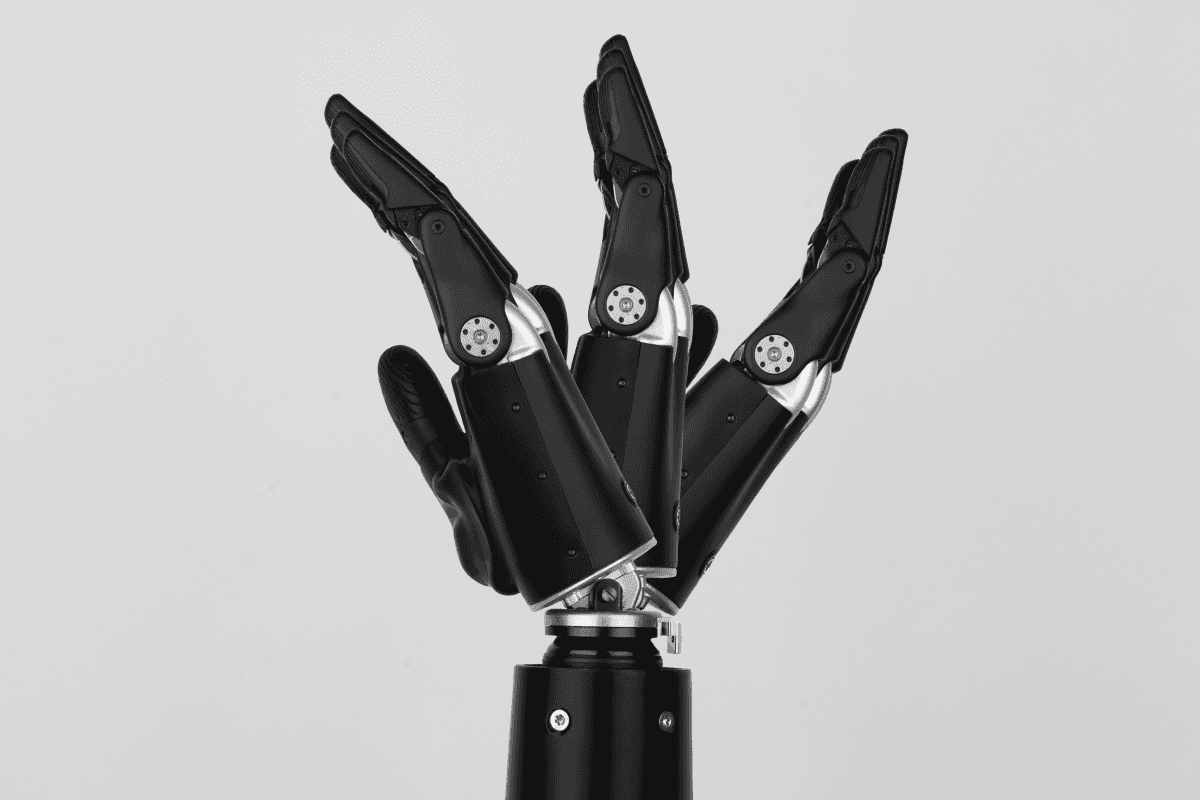
Aether eliminates this operational downtime by utilizing a highly modular design constructed out of 9 interchangeable modules. Because the system features individual, self-contained zones, a certified local prosthetist can replace local repairable bionic digits or swap out internal electronics right in their office.
This local approach removes the necessity for factory shipping and keeps your care entirely within your local clinic.
This modular strategy distinguishes repair timelines across specific configurations to minimize clinical downtime. Maintenance for the standard configuration of the Zeus hand can typically be completed in under 30 minutes, while repairs for the compact Zeus S variant take under 10 minutes.
For clinics evaluating service expectations, this service model helps them decide based on turnaround time and component quality, while local modular component swaps ensure that users do not have to disrupt their daily routines or rely on temporary loaner hands.
To minimize the need for regular maintenance altogether, the fingers utilize elastic, shock-absorbent digit engineering. A patent-pending compliance mechanism allows the fingers to flex laterally under unexpected side impacts rather than snapping, drastically reducing your overall clinic visits.
Prosthetic devices also typically need full replacement every 3–5 years, which makes modular local service and long-term planning important.
Which Built-In Grip Configurations and Digital Tools Are Essential for Daily Living?
The ideal multi-articulating bionic hand must balance diverse physical grip capabilities with fast, uncomplicated digital access to prevent user frustration during rapid task transitions. Having access to multiple grip shapes is only helpful if you can toggle between them instantly without interrupting your natural workflow.
Selecting a system that simplifies these configurations allows you to move smoothly between office tasks, home activities, and social environments. For an active person, water and dust resistance should also be among the key features you compare.
Modern myoelectric hand, like Zeus systems utilize a diverse matrix of 14 predefined grip patterns to conquer complex daily task flows. These include specialized options like precision pinch, power grip, and lateral grasp.
To prevent cognitive training fatigue, a custom configuration of myoelectric software organizes these patterns into 3 distinct user-configurable profiles tailored around your exact lifestyle, bypassing the overly complicated trigger menus that often cause mental exhaustion.
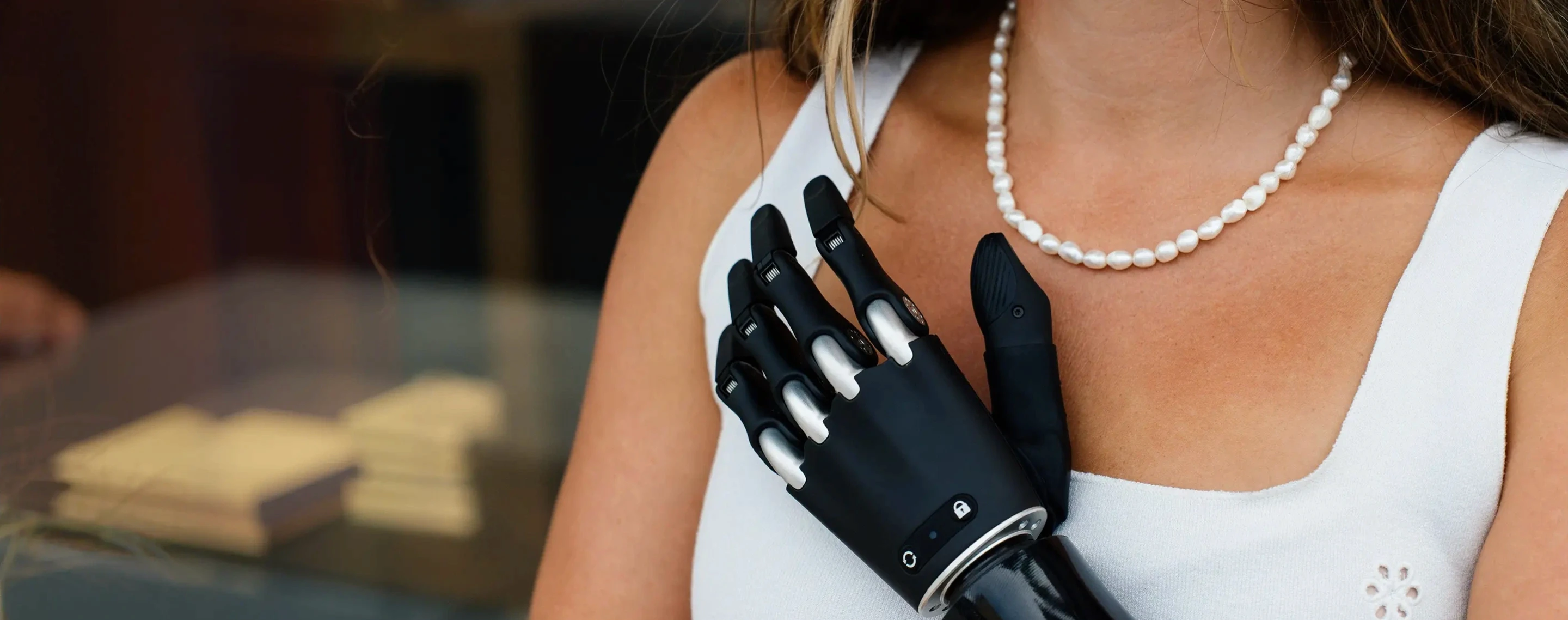
Modern life also demands seamless interaction with digital interface panels, office hardware, and communication tools. To accommodate this, the prosthesis includes a built-in touchscreen-friendly index design known as the Active Index.
This conductive digit allows you to type on tablets, check emails on smartphones, and interact with digital ticketing kiosks directly, removing the need to use a stylus or take off your device to stay connected for everyday tasks, while preserving a natural sense of control.
While muscle signals serve as the primary control mechanism, quick-access physical control buttons are built directly onto the back of the hand chassis. These tactical buttons function as an immediate, reliable fallback.
With a single physical tap, you can lock the hand into a specific grip shape or cycle through your customized profiles, which provides a highly dependable control option during moments of heavy muscle fatigue or intense physical sweat.
How Do Cloud-Based Software and Power Management Impact Long-Term Ownership?
Evaluating a bionic arm for long-term ownership requires analyzing the cloud software architecture and the physical charging infrastructure as a single, unified ecosystem. Software tools determine how effectively your care team can optimize the device over time, while battery design determines your daily operational independence.
Selecting a device with integrated digital support and resilient power management ensures your prosthesis remains a dependable asset for years to come.
The introduction of cloud-based remote clinical tuning of the upper limb through the Aether Digital Platform represents a major advancement in ongoing prosthetic care.
Certified prosthetists can securely log in to a standard web browser to monitor your real-time usage data, trace your configuration history, and evaluate signal trends such as peak muscle contractions.
If your muscle signals alter as your residual limb heals and gains strength, your clinician can adjust electrode sensitivity levels remotely, eliminating unnecessary office visits for minor micro-adjustments.
Complementing this backend portal is a dedicated companion mobile app that pairs your smartphone directly with your device. This personal application empowers you to make minor, safe modifications to your clinician-established sensitivity settings on the fly.
Whether you are entering a vibration-heavy workshop environment or handling delicate household items, you can fine-tune your hand's physical responsiveness to perfectly match your immediate surroundings.
Daily battery reliability depends heavily on the hardware hidden inside your socket assembly. Advanced myoelectric setups utilize low-profile surface sensors that feature a casing height of just 6.7 mm, minimizing overall socket bulk and protecting against painful skin friction points.
To feed the heavy energy demands of multiple independent digital joints, the hand utilizes a high-capacity prosthetic battery system. This 2800 mAh, 8.4 V, 5 A configuration features advanced circuitry designed to safeguard against overheating and overcharging.
This power infrastructure includes socket-integrated USB-C charging mechanics and an embedded LED battery life screen, making power management visible. Instead of guessing your remaining power level, you can verify your status with a glance at the chassis display.
Because the port utilizes universal USB-C connectivity, you can rapidly recharge your device on the go using a standard phone power bank or a standard vehicle charger, ensuring full physical independence wherever your day takes you.
Frequently Asked Questions About Insurance Coverage
How do I know which bionic hand size is right for my frame?
Determining the correct size requires a comprehensive clinical evaluation of your residual limb dimensions, overall body height, and bilateral weight balance.
Choosing between the standard configuration and the compact Zeus S build is about achieving symmetry; matching the device to your natural frame minimizes secondary strain on your musculoskeletal system and prevents shoulder fatigue.
What strength metrics should I compare when choosing between a standard and a compact bionic hand?
You should primarily contrast active clamping force and static load limits against your daily occupational or recreational activities. If your lifestyle involves lifting heavy equipment or handling rugged tools, the 152N active force and 35 kg static hook capacity of the standard configuration provide maximum utility.
If your focus is lightweight daily agility, the 120N active force and 20 kg static capacity of the compact Zeus S model offer ample power in a lighter chassis.
Why is a modular hand architecture better for a user's lifestyle than a traditional build?
A modular hand architecture serves as an insurance policy against extended lifestyle disruptions. Traditional builds require you to ship the entire hand away to a factory depot for weeks to repair a single damaged finger.
Choosing a device split into 9 interchangeable modules allows an accredited local prosthetist to perform complete component swaps in 10 to 30 minutes right inside their local clinic, keeping you in your device.
How does the software layout affect user frustration and cognitive fatigue?
Traditional multi-articulating hands often force users to cycle through massive, confusing grip menus using complicated muscle pulses, which quickly leads to mental exhaustion.
Opting for a streamlined software layout that condenses functionality into 14 predefined patterns across 10 tailored, user-configurable profiles ensures that your most frequent grips are always easy to access.
Can I test or adjust a bionic hand's control settings without driving to a clinic?
Yes, modern upper-limb systems support cloud-based remote clinical tuning through browser-based interfaces like the Aether Digital Platform. If your muscle signals fluctuate or you require an electrode threshold adjustment, your certified clinician can calibrate your myoelectric settings remotely while you connect your hand to your personal smartphone companion app at home.
Conclusion
Choosing the right bionic hand is not about adjusting your lifestyle to fit a piece of technology; it is about finding a high-performance system that steps up to match your exact pace.
True independence is achieved when your terminal device stands up to heavy everyday stress, responds instantly to your thoughts, and adapts seamlessly to our highly connected digital world.
By prioritizing a design that offers rugged durability, simplified custom software profiles, and responsive real-world strength, you help restore more natural, human ability in daily use rather than settling for technology that slows you down.
The ultimate choice comes down to taking back full control of your schedule. Settling for traditional bionic models means accepting long factory service delays and sudden lifestyle interruptions whenever a component takes a hit.
Opting for a modular, local repair architecture completely shifts the ownership experience, giving you the peace of mind that a minor breakdown can be solved in a matter of minutes. Work with your clinical care team to evaluate your physical frame and activity baseline; this matters even more for children, since fit and activity demands change as they grow.
For most people navigating limb loss, that is the definitive step toward prosthetic limbs built to help them live completely without limitations.
To bypass the typical weeks of factory delay and unlock the world's most powerful modular grip system on the market today, secure your personal trial and contact Aether Biomedical right now.

Read On
See Zeus in action across clinical settings worldwide