Common Myths About Bionic Hands: Debunking Prosthetic Fiction
Picking up a warm cup of cocoa in the morning or turning a heavy doorknob are tasks most of us do without thinking twice. For individuals who have lost a hand or an arm, however, these simple actions used to require a lot of careful planning and hard work.
The world of advanced technology is changing very fast, but what most people think they know about robotic limbs is still stuck in the past. We frequently encounter outdated, highly dramatized stories that give people the wrong idea about what a modern robotic hand prosthetic can actually do.
When we listen to conversations about advanced artificial limbs, it is easy to spot a lot of incorrect information. Science fiction movies have painted a picture of bionic arm options that either work perfectly like magic or are as fragile as a piece of glass.
This big gap between our imagination and real life makes things confusing for doctors, families, and the people who need these tools. We believe it is time to clear up the confusion and look at the real facts and engineering behind a modern prosthetic bionic hand.
By looking closely at how these modern hands are built, we can break down the myths that keep people from understanding the truth. Real progress relies on honest facts, clear measurements, and true stories about how these bionic prosthetics perform.
Let us dive right into the most common myths and discover the amazing, strong engineering that brings a modern bionic hand to life.
Why do people mistakenly believe bionic hands are controlled directly by thoughts alone?
Dismantling the Science-Fiction Mind Control Misconception
We often hear the exciting story that an advanced bionic hand can connect directly to a person's thoughts or brain waves. This is a popular idea in science fiction movies, where a character simply thinks about moving, and a mechanical hand moves instantly through a mind link.
While this makes for an awesome movie scene, it is not how real-world bionic arm control works at all. Real robotic hands do not plug into your brain or read your thoughts from a distance.
The True Mechanics of Bio-Signal Surface Processing
The real science behind controlling a modern robotic hand is all about muscle movements in the arm, not mind control. Modern bionic hands are myoelectric systems, and this prosthetic technology works by reading muscle activity rather than thoughts.
When a person wants to open or close their missing hand, the muscles left in their arm still tighten and flex in regular patterns. When these muscles move, they create tiny pulses of electricity just under the skin, which are called electromyographic signals.
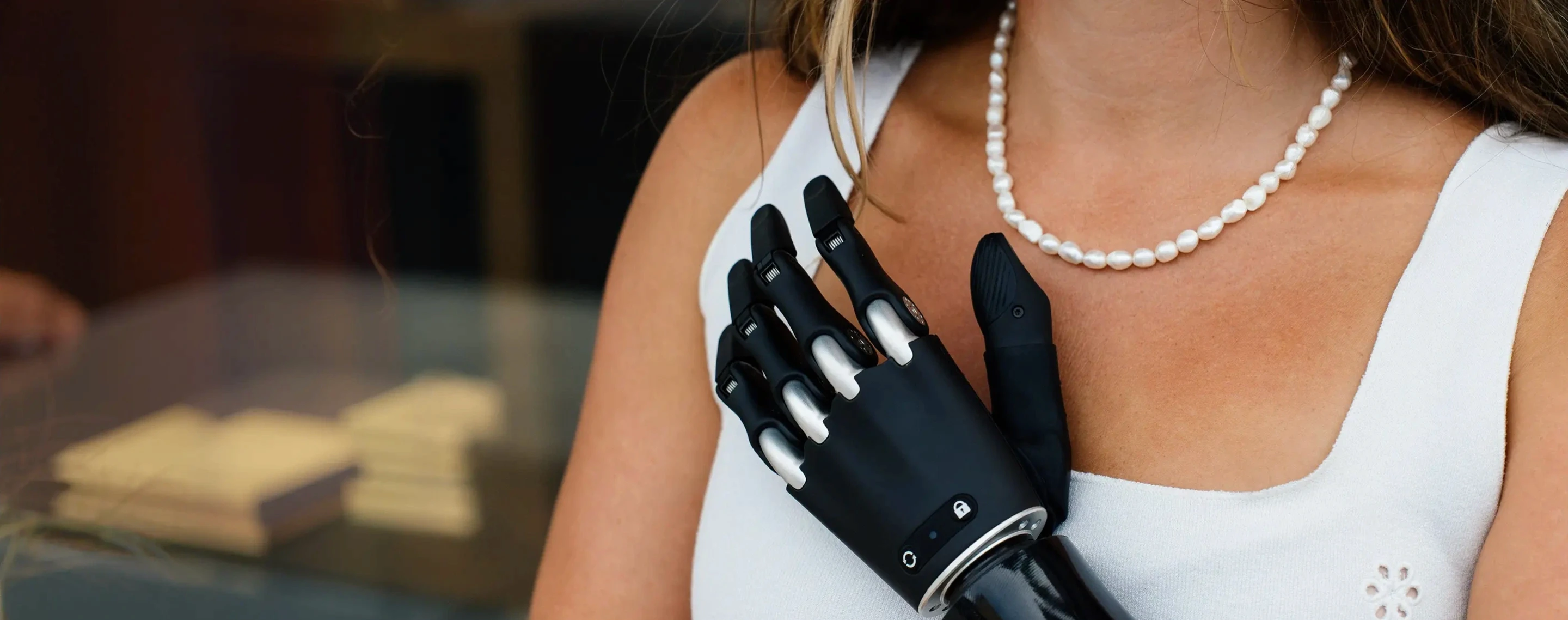
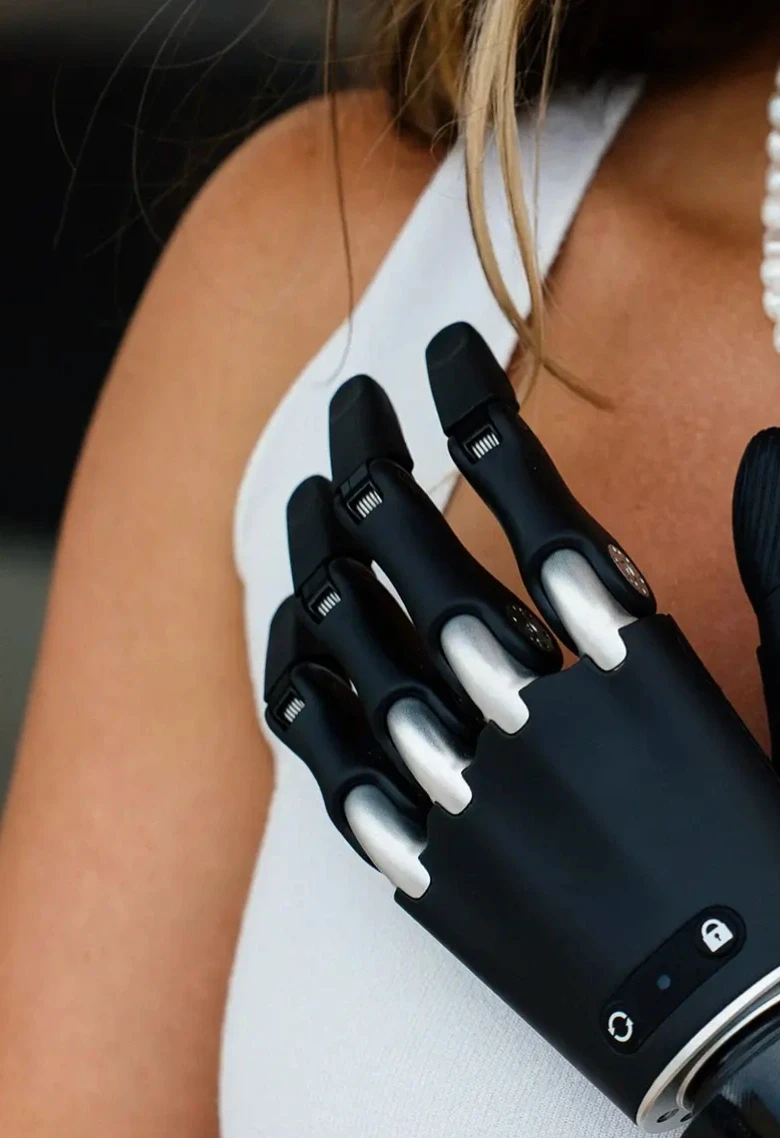
To catch these tiny electrical signals, special myoelectric sensors are placed snugly against the skin inside the artificial arm’s socket to detect electromyographic, or EMG, activity through the skin. Modern systems built by Aether Biomedical are engineered to read these muscle signals through different simple setups depending on what the user needs, including:
Standard two-sensor setups that watch two muscle groups
Single-sensor setups for basic control
Simple physical switches that can be pressed
The hand’s function depends on muscle sensors, internal motors, and repeated user practice to operate reliably.
How Intuitive Calibration Creates a Seamless Connection
Once the computer inside the hand catches these raw muscle signals, smart software cleans up the data. The system quickly ignores confusing electrical noise caused by sweat, skin sliding around, or minor bumps.
The internal software then translates those clean muscle signals into real movements, changing the hand’s speed and grip strength instantly based on how hard the muscles contract.
This smart setup creates a fast and responsive connection, but learning to operate advanced bionic hands efficiently is still a trained skill that relies on regular practice and guidance from a clinical team to optimize performance. At first, that deliberate control can be mentally tiring, even though use becomes smoother with time.
Is it a myth that multi-articulating bionic fingers are inherently fragile and easily broken?
The Vulnerability of Older Structural Generations
Another common myth is the belief that bionic prosthetics with fingers that move individually are far too delicate for real life. We understand why people worry about this, because the older versions of high-tech artificial hands broke very easily. Those older models often suffered from cracked outer shells or snapped plastic gears from simple everyday knocks.
Because the old designs were completely rigid and stiff, hitting a wall or a doorway would send a harsh shock straight into the tiny motors inside.
This meant a tiny mistake could break the whole hand, forcing the user to box it up and ship it away to a far-off factory for months to get fixed. Today, however, new engineering has completely changed this reputation by building a robotic hand prosthetic that is incredibly tough.
The Introduction of True Impact-Resistant Compliance Mechanisms
Modern engineers have solved the problem of fragility by building special shock-absorbing parts directly into the finger joints. In advanced hands like the Zeus portfolio developed by Aether Biomedical, the fingers are not locked into a stiff, easily broken position.
Instead, a patent-pending impact resistance mechanism allows the individual fingers to flex and bend naturally when they hit something hard, absorbing the energy of the bump and bouncing right back into place without breaking the internal parts.
The Structural Power of Modular Independent Motorization
This toughness is made even better because each finger is built with its own independent motor. With five separate motors driving five separate fingers, each digit can move and stop all on its own.
When one finger hits a hard object, it stalls automatically and independently while the other fingers keep moving around the item. This independent stalling protects the internal gears from getting twisted or strained, helping the robotic hand last a very long time through normal daily play and work.
Are advanced bionic hands too weak to handle heavy-duty manual labor or weightlifting?
Debunking the Low-Strength Mechanical Limit Myth
We frequently hear the assumption that advanced robotic hands are only meant for very light, delicate tasks like picking up a single paperclip or holding a pencil. Many people think that because a hand has a lot of moving parts, it must be too weak to lift heavy objects or handle tough chores.
This myth can lead to hesitation or delayed decisions about prosthetic options because people worry the device cannot keep up with their lifestyle. Modern devices are built with robust mechanical architectures to support active lifestyles, ensuring that daily functional tasks are entirely achievable.
The Reality of High-Output Grip Force Thresholds
The technical specifications show that the Zeus hand range is designed to balance grip strength, control, and everyday usability. Zeus V1 and Zeus V2 have different performance profiles, so their specifications should be presented separately to avoid confusion.
Zeus V1 provides a maximum grip force of 152 N / 34.17 lbf, with a closing time of 1.2 seconds. Zeus V2, available as Zeus S and Zeus M, provides 120 N / 26.97 lbf of grip force, with a faster closing time of 0.8 seconds. Both options are designed for mild to moderate daily activities and should be selected with guidance from a qualified clinician.
Specification | Zeus V1 | Zeus V2, Zeus S / Zeus M |
Maximum grip force | 152 N / 34.17 lbf | 120 N / 26.97 lbf |
Time needed to fully close the hand | 1.2 seconds | 0.8 seconds |
Force with a closed hand, static carrying | 350 N / 78.68 lbf | 200 N / 44.96 lbf |
Force on chassis, static support | 500 N / 112.40 lbf | 500 N / 112.40 lbf |
This strength is supported by individual finger stalling, which allows the fingers to conform to the shape of an object, and by grip patterns such as Hook Grip, Power Grip, and Tripod Grip. In daily use, this helps the Zeus hand securely hold suitable objects such as bags, keys, pens, books, or a wine glass, depending on the selected grip and clinical setup.
The Versatility of Dynamic Software Controls
Working alongside this physical strength is smart software that gives the user total control over how hard the hand squeezes. Users do not have to worry about accidentally crushing everyday items because the hand does not squeeze at maximum power all the time.
By simply changing how hard they flex their arm muscles, users can adjust the hand's speed and power smoothly. They can switch instantly from a heavy-duty grip for big tools to a very soft, gentle touch for holding fragile objects like eggs or glassware with total confidence.
Why do people assume a broken bionic hand leaves a user isolated without a limb for months?
The Reality of Long-Distance Factory Repair Delay Myths
In the past, breaking a piece of an advanced artificial arm was a huge problem for the user. We remember how the old repair systems worked, where a tiny broken part meant a patient had to live without their artificial arm for weeks or even months. The entire hand had to be taken off, packed into a box, and shipped across the country or overseas to a giant repair factory.
While waiting for the factory, the user had to get by with no hand at all or try to use an uncomfortable loaner hand that did not fit them correctly. This old fear of long factory delays still scares people today, causing them to choose older, less helpful hands just to avoid the risk of being stuck without a bionic arm.
Thankfully, modern modular engineering has fixed this problem completely.
The Game-Changing Advantage of Local Clinical Serviceability
The Zeus hand avoids this annoying wait by using a smart design made of 9 separate, independent modules. Instead of building the hand as one single piece that is permanently sealed shut, it is split into simple, self-contained sections.
This means the individual finger parts and motor pieces can be reached and worked on one by one. This clever layout brings the massive advantage of quick local repairs right to the user’s clinic without needing temporary loaner devices.
Reducing Patient Clinical Downtime From Months to Minutes
Because the hand is built to be 100% repairable on-site, an authorized local clinical team can perform fixes right inside their own office. If a user bumps their hand hard and breaks a single finger, the hand does not need to be mailed away.
The local clinician can access the modular hand structure, remove the affected finger module, replace it with a new component, and check the connection. This in-office repair process helps reduce service delays and supports faster turnaround for patients. Zeus V2, available as Zeus S and Zeus M, is designed for complete modular repair in under 10 minutes, while Zeus V1 can be repaired locally by certified clinicians in under 30 minutes.
Is it a myth that advanced myoelectric prosthetic technology is completely unaffordable and out of reach?

The Misconception that Insurance Excludes High-Tech Bionics
Perhaps the most discouraging myth we hear is the idea that a high-tech robotic hand prosthetic is an impossible financial luxury that only the richest people can afford.
Because these devices use advanced robotics and computer software, some people assume they are too costly, even though insurance coverage and funding pathways can make them more accessible than expected.
People also look at the overall robotic hand price online and worry that they will have to pay for everything out of their own pocket.
The Impact of Official PDAC Approval Status
We are very happy to share that the financial side of getting a bionic hand has improved dramatically over the last few years. Advanced, multi-moving robotic hands are no longer ignored by major medical insurance providers. A huge milestone in making these hands affordable was earning official government and insurance coding approvals.
The Zeus hand portfolio has officially earned Pricing, Data Analysis, and Coding approval under the medical code L6880. This official status means the technology is legally approved for direct Medicare coverage across the United States.
Because this official code exists, standard health insurance providers have a clear, pre-mapped path to review, approve, and pay for these hands for patients who qualify.
How Lean Manufacturing Expands Global Patient Accessibility
Along with great insurance coverage, modern manufacturers use smart building techniques to keep costs down. By organizing the internal parts efficiently and using streamlined manufacturing methods, companies can build high-quality hands with much less waste.
Lowering the cost to build the hand means the final price is much more affordable for clinics and patients all over the world. This combination of official Medicare approval and smart manufacturing ensures that high-end bionic technology is becoming a realistic option for more amputees than ever before.
What daily use practical limits must bionic hand users still recognize?
While modern bionic technology is amazing, we believe it is super important for users to understand the real physical limits of their devices. Knowing exactly how to take care of your equipment keeps it safe and prevents accidental damage.
Proper prosthetic care and regular clinical maintenance ensure the long-term structural integrity and optimal functional performance of the device. Here are three basic everyday rules that every bionic hand user needs to remember:
No Swimming or Bathing: Even though modern robotic hands can handle a walk in light rain or minor kitchen splashes, they are not waterproof. They must never be pushed underwater in a swimming pool, a bathtub, or a deep sink because water leaking into the electronic core can damage sensitive components and cause an immediate short-circuit. If the hand is accidentally exposed to moisture or a liquid splash, the user should immediately wipe it dry with a clean cloth to prevent liquid entry into the internal chassis.
No Real Sense of Touch: Although the independent motors allow the fingers to wrap perfectly around different shapes, the hand does not have real human skin or nerves. Standard myoelectric configurations do not provide tactile sensory feedback, meaning users rely primarily on visual confirmation to gauge active closing positioning. Users cannot feel if something is hot, cold, smooth, or rough through the plastic and metal; instead, they use their eyes to watch what they are gripping and pay attention to the physical vibrations moving against their arm.
Daily Battery Charging is Required: Running five separate finger motors and a mini-computer takes a lot of electrical energy. Users must remember to charge their built-in battery system every day, plugging it into a standard charger overnight just like a smartphone to make sure the hand is ready to go in the morning. Charging is only one part of upkeep, and regular check-ups help the hand keep working safely and comfortably.
FAQs
Are bionic prosthetic hands controlled directly by the user's brain waves or thoughts?
No, real bionic hands do not read your thoughts or scan your brain waves. They work by using sensitive sensors placed against the skin inside the arm socket to pick up the real electrical pulses made when you tighten your remaining arm muscles.
Why do common myths about bionic hands cause people to assume the devices are too fragile for daily use?
Most people assume they are fragile because the older versions of robotic hands used to break easily when bumped. Modern hands solve this problem by using flexible, shock-absorbing joints and separate motors that allow the fingers to bend safely under pressure without breaking.
What happens if an individual finger breaks on a modular bionic hand?
Because the hand is built out of 9 separate modular pieces, a broken finger is an easy fix. You do not have to mail the hand away; instead, an authorized local prosthetic doctor can swap out the single broken finger module right inside their clinic office.
Are bionic prosthetic hands fully waterproof and safe to submerge in water?
No, they are not waterproof and must never be dunked underwater. They can handle a few drops of rain or a minor splash, but they must be kept out of pools, tubs, and sinks to protect the electronics inside from getting ruined.
How long does it take a clinician to repair or perform maintenance on a modular bionic hand?
Thanks to the modular setup and easy-to-fix parts, repairs are incredibly fast. An authorized clinician can perform modular repairs or swap individual fingers locally in under 10 minutes for smaller form factors and under 30 minutes for standard configurations.
Bridging the Gap Between Users and Their World
Improving the ways that a robotic hand can hold and interact with everyday objects is changing the world of physical rehabilitation. While creating an artificial skin that feels exactly like real human touch is still a major challenge for global science, modern engineering gives us fantastic, usable alternatives.
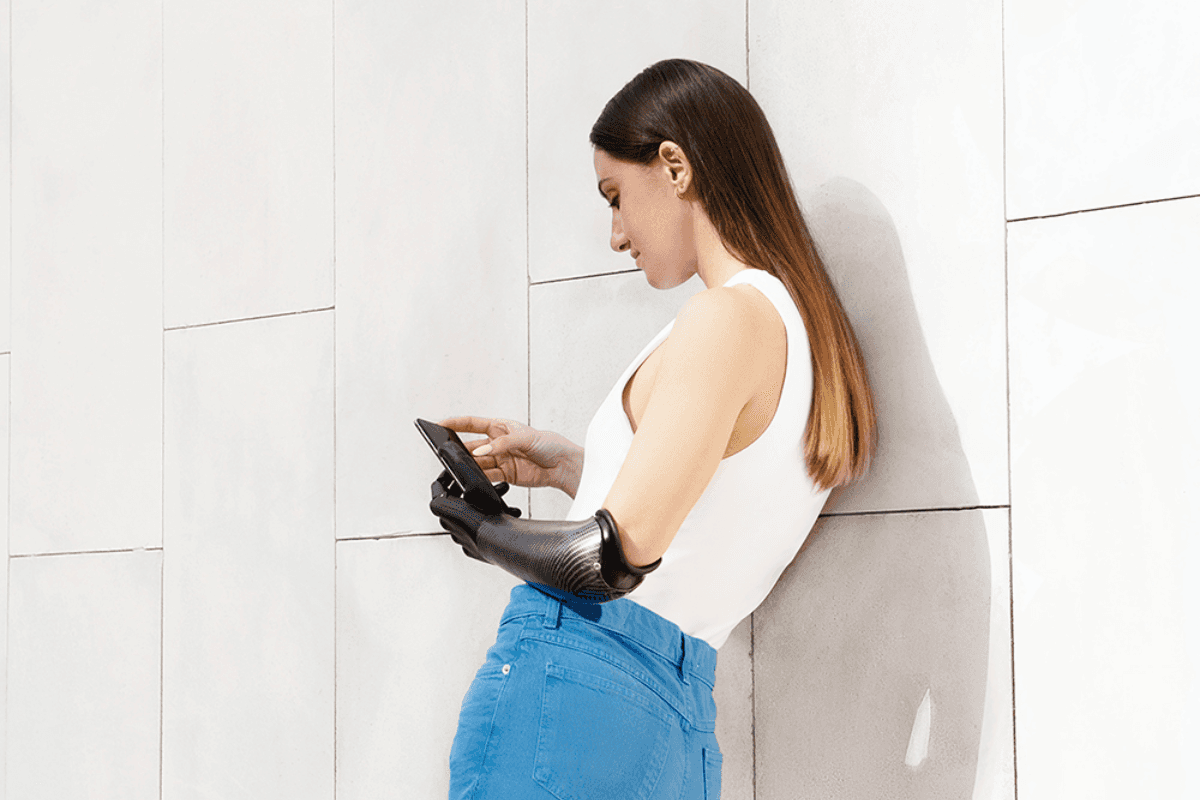
Useful design choices like independent, self-contained finger motors, heavy-duty vertical hook lifting capacities, and an Active Index digit for digital touchscreen navigation demonstrate how modern bionics are optimized for daily operational independence.
We invite you to see what happens when advanced robotics meets real life. If you want to see how these engineering choices actually feel in your day-to-day routine, or if you just have questions about how a bionic arm fits into your world, let's talk. Send a message to Aether Biomedical today, and let's figure out what your next steps look like.

Read On
See Zeus in action across clinical settings worldwide