Prosthetic Limbs Insurance for Bionic Hands

Insurance approval for an upper-limb bionic hand is rarely just about choosing a device. Most payers want to understand why the prosthesis is medically necessary, how it will support daily function, which clinical notes support the request, how the device is coded, and what follow-up care may be needed after fitting.
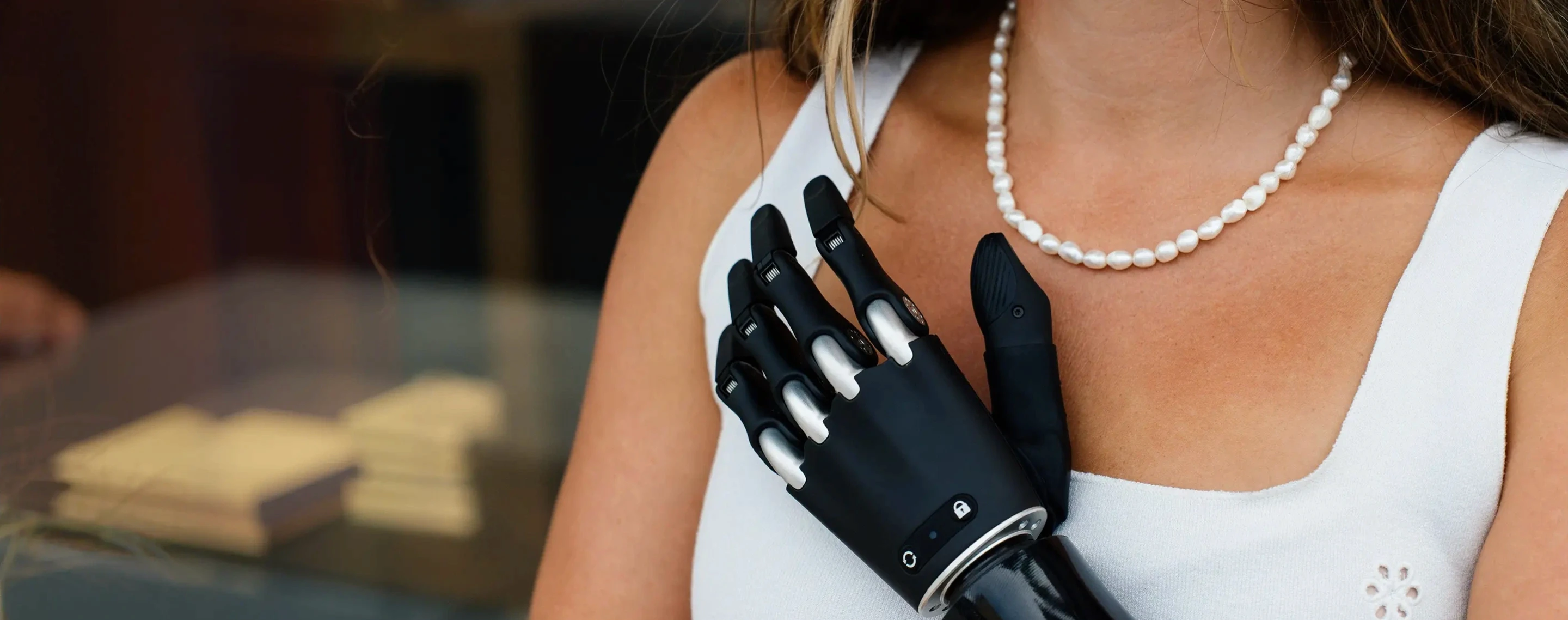
This article focuses on prosthetic limbs insurance and coverage navigation for upper-limb myoelectric prosthetics, including the Zeus hand. A coverage request should explain how a myoelectric device meets the patient’s documented clinical and functional needs.
Zeus hands are fitted by qualified clinicians and are intended for mild-to-moderate daily activities. Aether does not manufacture sockets; clinicians provide sockets as part of the fitting process.
How Does Health Insurance Cover Upper-Limb Bionic Prosthetics?
Health insurance coverage for an upper-limb bionic hand depends on the payer and the plan. Many private and other health plans may cover prosthetics, and Medicare Part B covers medically necessary prosthetic limbs. Medicaid coverage for prosthetics varies by state rules, and approval is never automatic.
prosthetic coverage can also be shaped by state parity laws that require coverage comparable to other medical services.
A payer may review:
The patient’s diagnosis and amputation level
The condition of the residual limb
The clinical reason for the device
The patient’s daily functional needs
The prosthetist’s recommendation
The billing codes used for the claim
Prior authorization requirements
Repair, maintenance, and replacement considerations
This is why a prosthetic bionic hand claim needs more than a product name. The insurer usually wants evidence that the recommended device supports real daily tasks and that the patient can use it safely with clinician support.
What Requirements Do Insurers Usually Look For?
Insurers look for structured clinical proof showing that a requested prosthesis is clinically appropriate and functionally necessary for the patient's specific needs. This requires formal documentation starting with a physician's prescription and a Standard Written Order (SWO) where required before submitting claims, alongside a thorough clinical evaluation by a certified prosthetist or qualified healthcare professional. The assessment must outline the patient's diagnosis, amputation level, residual limb condition, and readiness for fitting, as well as concrete functional goals and the routine daily activities the device is expected to support.
To justify an advanced myoelectric device over simpler alternatives, the documentation must show why lower-tier options cannot meet the user's daily functional demands. This involves presenting relevant myoelectric signal testing, trial or demonstration notes when available, and clinical confirmation that the user can safely operate and maintain the device. When requesting a bionic hand prosthetic, broad justifications like "improved independence" carry little weight compared to specific examples of real-world tasks the device will enable within the patient's actual routine.
7 Documents That Can Help Support Prosthetic Insurance Approval
A strong insurance submission is usually built from several pieces of documentation. Missing or vague paperwork can slow down the process or lead to a denial, so claims and supporting records should be submitted promptly to avoid avoidable processing delays.
Here are seven critical documents often required for prior authorization:
Physician Prescription & Standard Written Order (SWO): Formal order from a licensed medical provider confirming medical necessity before submission.
Clinical Evaluation Notes: Comprehensive medical history documenting amputation level, residual limb condition, and functional goals.
Prosthetist Assessment: Clinical rationale explaining why specific features, such as up to 152N active grip force or 14 predefined grip profiles, are required for daily function.
Letter of Medical Necessity (LMN): Detailed clinical breakdown connecting the prescribed terminal device to specific daily functional limitations.
Functional Needs & Goal Assessment: Objective evaluation of vocational, domestic, and community tasks requiring multi-articulating function.
Myoelectric Signal Evaluation: Diagnostic recording using Aether MyoSense surface EMG sensors to prove the patient can reliably control multi-grip modes.
HCPCS L-Code Billing Breakdown: Itemized billing structure covering the base prosthetic frame, terminal device, wrist components, and clinical care.
Other documents may also be needed, such as prior authorization forms, photos, measurements, socket-related notes, payer-specific forms, or repair and maintenance planning.
How Do You Establish Medical Necessity for a Zeus Hand?
Establishing medical necessity for a Zeus hand requires the clinical team to explain why the device is necessary for a specific patient rather than simply highlighting its technical features. The case must identify the affected body part and demonstrate how the prosthesis will replace or restore function by linking the recommendation directly to the patient's routine activities at home, work, school, or in the community. Documentation must clearly outline the user's specific functional limitations, verify that reliable myoelectric control signals are present, and justify why a multi-articulating myoelectric hand is clinically appropriate while demonstrating that simpler prosthetic alternatives cannot meet these daily functional demands.
The clinical package should also detail how the recommended configuration aligns with patient goals and how the care team will manage fitting, configuration, training, and long-term follow-up. When applicable to the patient's treatment plan, clinicians can reference relevant capabilities of the Aether Digital Platform, such as remote configuration, EMG analysis, progress monitoring, clinician communication, firmware updates, and usage tracking. Finally, addressing factors like pain or limb loss when they directly impact device utilization and clinical need helps create a comprehensive case for coverage.
What Role Do HCPCS L-Codes Play in Bionic Prosthetic Billing?
HCPCS L-codes are billing codes used for prosthetic devices, components, and related services. In simple terms, they help the payer understand what is being billed.
For a bionic arm or bionic hand request, coding may include the base prosthesis, terminal device, wrist components, socket-related work, service codes, repairs, or adjustments. The exact coding should match the prescribed components and the clinical documentation.
Patients do not need to manage this alone. The prosthetist, billing team, or clinician should handle coding. Still, it is reasonable for patients and caregivers to ask for a clear explanation of what is being submitted and what the estimated patient responsibility may be before fabrication begins.
What About Robotic Hand Price and Insurance?
Robotic Hand Price is a common search term, but pricing should not be treated as a simple online number. For an upper-limb prosthesis, the patient’s final responsibility can depend on the payer, plan design, deductible, coinsurance, network rules, prior authorization outcome, socket needs, fitting process, and follow-up care.
Aether guidance does not support stating a fixed Zeus hand price in patient-facing content. The more useful question is not “What does a robotic hand cost?” but “What does my plan require before it will consider coverage?”
Patients should ask their prosthetist or care team:
Has prior authorization been requested?
What documentation has been submitted?
Which parts of the prosthetic system are included?
What socket-related work is needed?
What repairs, adjustments, or follow-up visits may be involved?
What portion may be the patient’s responsibility under the plan?
This keeps the discussion practical without making unsupported pricing claims.
What Are the Key Steps to Getting Insurance Approval?

Getting insurance approval follows a structured clinical pathway:
Comprehensive Clinical Evaluation: The prosthetist and physician assess residual limb status, range of motion, and functional requirements.
Biosignal Testing: The clinical team tests muscle signal quality using Aether MyoSense surface EMG sensors to verify control candidacy.
Device Selection & Rationale: The prosthetist selects the appropriate configuration, matching device specs (such as the 480g lightweight profile of Zeus S) to user goals.
Documentation Package Assembly: The clinical team compiles the LMN, prescription, EMG logs, and HCPCS coding breakdown.
Prior Authorization Submission: The documentation package is submitted to the payer for medical necessity review.
Payer Review & Verification: The insurer evaluates the claim against internal coverage policies and parity requirements.
Fitting & ADP Configuration: Following approval, the clinician fits the custom socket and uses the Aether Digital Platform (ADP) to configure signal thresholds and train the user.
What Approval Factors Can Strengthen the Claim?
A strong claim makes the patient’s need easy to understand. It should show why the recommended prosthesis is appropriate, how it supports daily function, and why the patient can use it safely.
Approval factors that may help include:
A clear connection between device features, performance evidence, and safe function in specific tasks
A strong LMN with specific examples
Documented myoelectric control ability, especially when upper limb prosthetics are being justified for the intended task demands
Clinician notes showing why the device is appropriate
Evidence that the patient can use and maintain the prosthesis safely
Alignment with payer policy
Complete and accurate coding
Trial or demonstration notes, if available
A plan for maintenance, repairs, and adjustments
For example, “patient needs a bionic hand” is too general. A stronger statement explains the specific tasks the patient needs to perform and why the selected prosthesis supports those tasks, such as grasping small objects with the fingers or controlling wrist joint movement.
What Should You Do If a Prosthetic Insurance Claim Is Denied?
If a prosthetic insurance claim is denied, start with the denial letter. The goal is to identify the exact reason for the decision before responding.
A denial may involve:
Missing documentation
Lack of medical necessity
Coding questions
Prior authorization issues
Benefit limitations
A payer decision that the device is not covered under the plan
A request for more clinical evidence
The patient, prosthetist, billing team, and prescribing provider can then review the claim package together. The next step may be adding clinical notes, strengthening the LMN, correcting coding issues, or submitting functional evidence that was missing from the first request.
An appeal should directly answer the payer’s stated reason for denial. Repeating the same information without addressing the issue is less likely to help.
How Do Maintenance, Repairs, and Replacement Affect Coverage?
Maintenance and replacement are part of long-term prosthetic care. Coverage depends on the payer, plan rules, medical necessity, documentation, warranty terms, and approval requirements.
Common maintenance and replacement factors include:
Socket adjustments due to residual limb changes
Socket replacement when fit changes materially
Component maintenance
Repair documentation
Wear and damage review
Warranty rules
Payer replacement timelines
Changes in functional needs
Aether guidance notes that Zeus V1 is repairable in under 30 minutes and Zeus S is repairable in under 10 minutes. This can be useful for care planning, but it does not mean insurance automatically covers every repair. Coverage still depends on documentation, medical necessity, payer approval, and plan rules.
Patients should speak with their clinician before demanding specialised activities. The prosthesis should be used within the care team’s guidance and the device’s intended use.
FAQ
Does health insurance cover upper-limb bionic prosthetics?
Health insurance may cover upper-limb bionic prosthetics when the device is medically necessary, and the request meets the plan’s rules. Coverage varies by payer, plan, documentation, coding, and prior authorization requirements.
What documents do I need for prosthetic insurance approval?
Common documents include a physician prescription, a Standard Written Order, clinical evaluation notes, prosthetist assessment, Letter of Medical Necessity, functional assessment, myoelectric signal evaluation, device recommendation, coding breakdown, and prior authorization forms; additional documentation may be needed for complex requests, and a new device or repair typically requires an updated prescription.
How do I appeal a denied prosthetic insurance claim?
Start by requesting the full denial letter. Then review the reason with the prosthetist, billing team, and prescribing provider. The appeal should address the specific issue, such as missing documentation, medical necessity, coding, or prior authorization.
Will insurance cover repairs or maintenance for a bionic hand?
Insurance may cover repairs or maintenance when they are medically necessary, documented, and allowed under the plan. Coverage depends on payer rules, warranty terms, documentation, and approval requirements.
How often will insurance replace a bionic prosthetic hand?
Replacement timelines are payer-dependent. A payer may consider replacement when the device no longer fits, cannot be repaired, has unrecoverable wear, or no longer meets documented functional needs.
Is the Zeus hand fitted directly by Aether?
No. Zeus hands are fitted by qualified clinicians. Aether does not manufacture sockets; clinicians provide sockets as part of the fitting and care process.
Conclusion
Insurance approval for an upper-limb bionic hand depends on a clear clinical case, and these are often life-changing devices for many amputees with upper-limb loss. The strongest submissions connect the patient’s daily needs, myoelectric control ability, device recommendation, documentation, coding, and maintenance plan into one complete story.
For the Zeus hand, the process should stay clinician-led. A qualified prosthetist or clinical team can assess whether the device is appropriate, prepare the required documentation, explain socket and fitting needs, and help the patient understand what the payer may require.
Coverage decisions may also depend on the prosthetic arm or hand prostheses requested, the upper arm or other body part involved, and the patient’s documented functional goals.
If you are considering a Zeus hand, speak with your prosthetist or clinical team about the next step. They can help review your functional goals, assess fitting requirements, and guide the insurance documentation process.

Read On
See Zeus in action across clinical settings worldwide