Cost-Efficient Upper-Limb Prosthetic Care
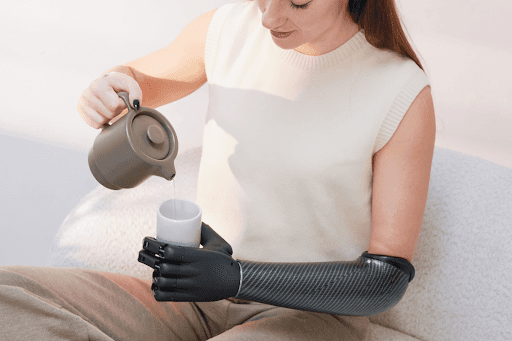
First off, the question sounds simple, but the answer rarely is. What exactly does a bionic hand cost, and more importantly, what value does a clinic, clinician, rehabilitation team, or patient receive from that investment?
The cost of prosthetic arms can range from $5,000 for basic body-powered models to over $100,000 for advanced myoelectric or robotic arms, depending on technology and features.
Advanced prosthetics, with high-tech features like neural control and multi-articulating fingers, command premium prices due to their technological sophistication and enhanced functionality.
The cost of a bionic hand depends on several key factors, including the technology level, clinical fitting requirements, component selection, maintenance needs, service support, warranty coverage, and insurance pathways.
The final price of a prosthetic arm depends on these key factors, with advanced features such as myoelectric or bionic systems significantly increasing costs due to their intricate design and functionality.
For clinicians and rehabilitation professionals, the real question is not only the purchase price. It is the total cost of ownership across the full care pathway.
That includes the hand itself, the power system, electrodes, fitting process, calibration, ongoing adjustments, repairs, servicing, and long-term clinical support.
The total lifetime costs of a prosthetic arm include not only the initial purchase but also ongoing maintenance, repairs, and potential upgrades.
For individuals with limb loss, advanced prosthetics can play a crucial role in restoring mobility and independence, making it important to understand these expenses for effective planning.
This is where Aether Biomedical offers a more streamlined approach to upper-limb prosthetic care. At the time of purchase, the Zeus hand can be available as part of a bundled solution together with the Aether Battery System and Aether MyoSense, Aether Biomedical’s advanced electrode system.
This gives clinics and providers the option to work with one connected ecosystem rather than managing separate components from multiple suppliers. Insurance plans may cover all or part of the cost, but coverage varies.
In fact, over 70% of bionic arms in the US are funded by insurance, challenging the common assumption that insurance won't cover advanced prosthetics.
For clinicians, that matters. Bundled purchasing can support cost savings, simplify procurement, reduce supplier complexity, and make long-term service management easier. Instead of juggling disconnected systems, clinics can work with one trusted company across key prosthetic components.
Aether Biomedical solutions, including the Zeus hand, Aether Battery System, and Aether MyoSense, are also available separately. That gives clinicians the flexibility to select the components that best fit the patient’s individual needs, existing setup, and clinical requirements.
In multiple markets, the Zeus hand is also supported by insurance coverage, which can help improve patient access to advanced myoelectric technology while giving clinics a more practical way to deliver high-quality care with confidence. Bionic hands generally cost between $20,000 and $100,000+, with advanced myoelectric models often ranging from $47,000 to $80,000.
What's the typical price bracket for a bionic hand?
Market Segmentation - A Wide, Wide World of Choice
The market for upper-limb prosthetic solutions is broad, with different options available depending on the user’s functional needs, clinical presentation, component requirements, and funding pathway.
Body-powered prosthetic systems, also known as body-powered prosthetics, are often considered more accessible from a cost perspective. They are cost-effective and use the user's body movements for control, providing functional advantages compared to more advanced, technology-integrated systems.
Cosmetic prosthetics, on the other hand, are primarily designed for appearance and are made from materials like silicone to resemble real skin. These cosmetic devices typically cost a few thousand dollars and offer limited functional capability.
Myoelectric systems, including myoelectric arms and multi-articulating bionic hands, involve more advanced components such as motors, sensors, software, batteries, and control systems. Myoelectric prosthetics utilize muscle signals to control the arm, allowing for more precise movements and natural movement compared to traditional body-powered systems.
Advanced models, such as high-end robotic prosthetics, incorporate technologies like microprocessors, providing enhanced control and functionality suitable for complex tasks. Key features of these prosthetic limbs include the ability to perform a range of user-controlled movements, and materials like carbon fiber are often used for durability and lightweight design, which can contribute to higher costs.
Costs for prosthetic arms can vary significantly. For example, transhumeral (above-elbow) devices are more expensive, typically ranging from $50,000 to $75,000, while transradial (below-elbow) options usually cost between $25,000 and $50,000.
Basic cosmetic prosthetics generally cost a few thousand dollars, making them an affordable entry-level option. Pediatric prosthetics are also available, with prosthetic limbs specifically tailored for children to accommodate their growth and activity levels.
For clinicians, the important point is that cost should be assessed as part of a complete prosthetic solution, not as a standalone device figure. A bionic hand must be considered alongside fitting requirements, battery compatibility, electrode setup, software configuration, maintenance, warranty support, and future servicing.
This is why integrated purchasing can be useful for clinics. When the hand, battery system, and electrode system are selected as part of one Aether Biomedical ecosystem, clinicians can reduce procurement complexity and support a more consistent fitting and support experience.
The Zeus Advantage
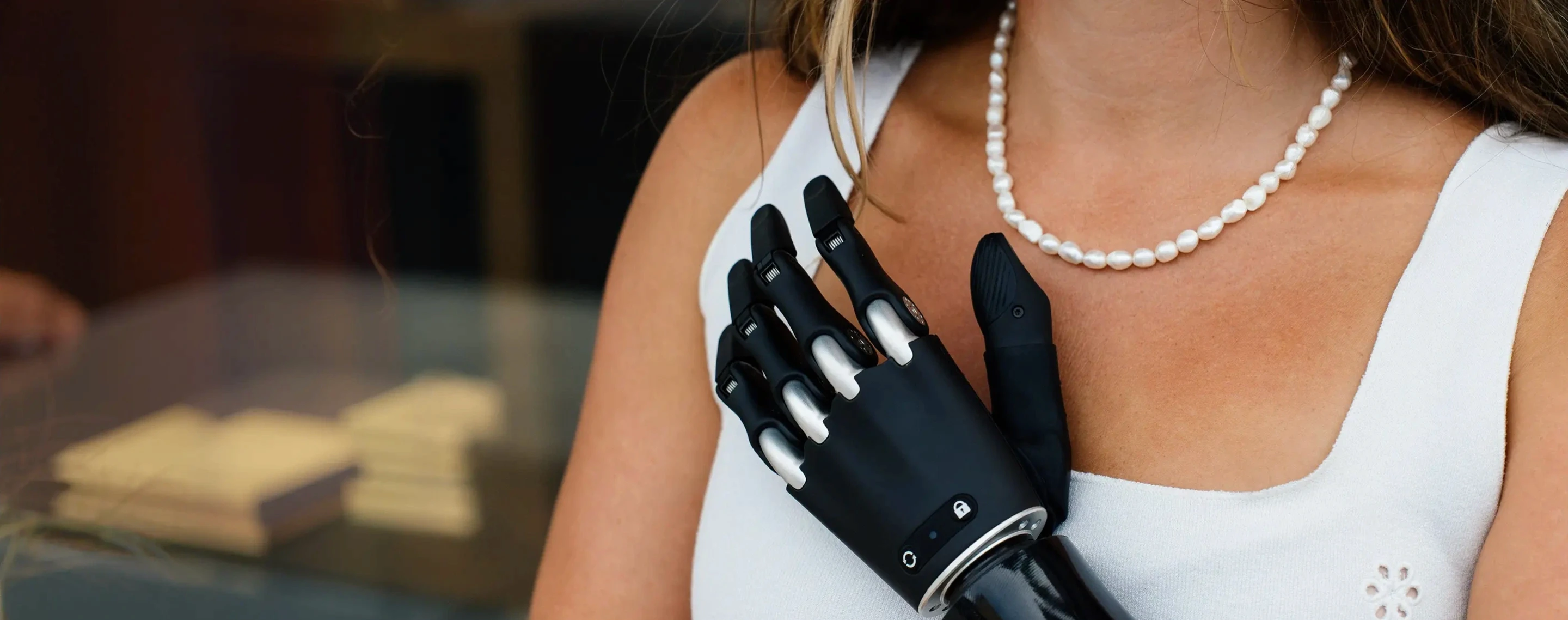
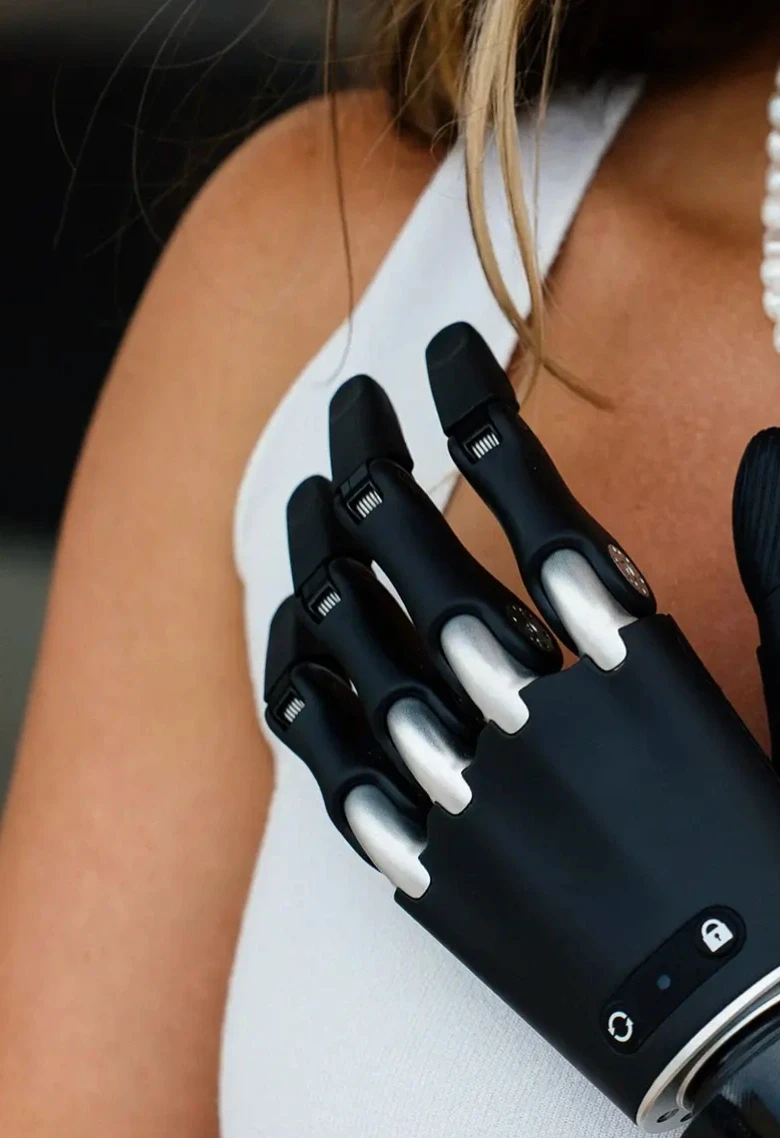
The Zeus hand is designed to offer advanced myoelectric functionality with a strong focus on clinical practicality, reliability, repairability, and long-term value.
As an advanced prosthetic, its key features include multiple grip patterns, touchscreen compatibility, quick access buttons, and rapid repairability. The cost of a bionic hand like the Zeus is primarily driven by its functionality and control mechanisms.
Aether Biomedical’s latest product catalogue presents the Zeus hand as available in Zeus S and Zeus M sizes, with EQD wrist and Flex wrist options. The catalogue states that Zeus offers 14 predefined + 10 configurable grip patterns, touchscreen compatibility through the index finger, quick access buttons, and 100% repairability in under 10 minutes for the latest Zeus models.
The catalogue also lists the Zeus hand technical specifications as 120N grip force, 0.8 second closing time, 500N force on chassis, and 200N force with closed hand when carrying a bag.
For clinicians, the advantage is not only the hand itself. It is the ecosystem around it. The Zeus hand can be paired with the Aether Battery System and Aether MyoSense as part of a bundled solution at the time of purchase. This helps clinics reduce the complexity of sourcing separate components and gives providers a more unified setup across the hand, power system, and electrode system.
That can support cost savings through bundling while also helping with long-term service efficiency. Fewer supplier touchpoints usually mean fewer operational headaches.
Global Price Disparities - Not as Clear-Cut as You'd Think
Pricing for bionic hand systems varies significantly across countries and healthcare systems. Local taxes, distribution models, reimbursement pathways, clinical fitting costs, and insurance coverage can all affect the final cost, making it important to understand prosthetic costs and available insurance options.
In 2026, bionic hand prices vary significantly based on technology, ranging from approximately $6,000 to over $100,000.
It is important not to treat the cost of the Zeus hand as one fixed global number. The final patient-facing cost may vary by country and will also depend on the fitting solution, socket, clinical services, and other required components.
For example, costs for transhumeral (above-elbow) devices are more expensive ($50k–$75k) compared to transradial (below-elbow) options ($25k–$50k). Aether Biomedical does not sell the Zeus hand directly to patients.
The company sells to clinicians, and clinicians or providers determine the final price based on the full prosthetic solution.
That is why it is better to talk about affordability and value rather than quote a single fixed price. The Zeus hand remains among the more affordable myoelectric options on the market while still offering advanced functionality, strong reliability, modular repairability, and integrated support.
Insurance coverage is also available in multiple markets, including the U.S., which can help improve access for eligible patients and support clinics in delivering advanced upper-limb prosthetic care.
Some states have laws that require insurance companies to cover prosthetic limbs, but these laws and insurance options can vary significantly from one state to another, so it is important to review local regulations when considering prosthetic costs. Additionally, ongoing expenses such as maintenance, repairs, and potential upgrades should be considered as part of the total lifetime cost.
What factors contribute to the initial cost of a bionic limb?
Hardware Complexity - The Core of the Matter
A bionic hand is not just one component. It is a coordinated system of mechanical, electronic, software, and clinical elements.
The Zeus hand includes multi-articulating functionality, configurable grip patterns, EMG-based control, modular construction, and a design built for clinical repairability.
The product catalogue highlights Zeus as having 14 predefined + 10 configurable grip patterns, quick access buttons, touchscreen compatibility through the index finger, and a modular structure designed for repairability.
Advanced models of bionic arms often incorporate technologies like microprocessors and AI, providing enhanced control and functionality, making them suitable for complex tasks.
The Aether Battery System adds another critical layer. It is designed to power the Zeus portfolio of bionic hands and compatible bionic hands, supporting reliable performance throughout the day.
The catalogue describes the Aether Battery System as offering a reliable power supply, 2800mAh battery capacity, LED indicators, USB-C charging, built-in safety features, and simple socket integration.
When clinicians select a bundled solution with the Zeus hand, Aether Battery System, and Aether MyoSense, they are not just buying separate products. They are selecting an integrated clinical ecosystem designed to work together. That can reduce compatibility friction, simplify setup, and support more predictable long-term care.
Clinical Labor and Customization - Getting it Fitted Properly
A major part of the total cost is tied to clinical expertise. A bionic hand needs to be fitted, configured, tested, and adapted to the patient’s needs.
Clinicians manage socket integration, EMG signal setup, calibration, grip configuration, training, follow-up, and functional optimization. These steps are essential to make the prosthetic solution usable, reliable, and aligned with the patient’s daily requirements.
This is also where Aether Biomedical’s integrated ecosystem can help clinical teams. When the Zeus hand, Aether Battery System, and Aether MyoSense are selected together, clinicians can work within a more unified component environment. That may reduce unnecessary troubleshooting and make the fitting pathway more efficient.
For busy clinics, that matters. Time saved on procurement, compatibility checks, and support coordination can translate into better operational efficiency and more time focused on patient care.
Software and Calibration - A Whole New World of Possibilities
Modern myoelectric prosthetic care depends heavily on software, configuration, and follow-up optimization.
The Aether Digital Platform supports clinicians by connecting the Zeus hand to a digital ecosystem. According to the product catalogue, the platform provides traceability, connectivity, remote configurability, and data efficiency.
It allows clinicians to access device configuration history, communicate with patients, send new configurations, view EMG signals, and track metrics such as grip cycles, EMG peaks, and grip switches.
Myoelectric prosthetic arms use electrical signals generated from muscles to control the device, enabling precise and natural movement. These devices typically cost between $20,000 and $50,000 or more, depending on their features and complexity.
For clinical teams, this supports more informed decision-making. Instead of relying only on patient recall or appointment-based adjustments, clinicians can use data to guide configuration changes and rehabilitation planning.
That also plays into long-term cost value. Better configuration, better monitoring, and faster support can help reduce unnecessary appointments, improve care continuity, and support a more reliable patient experience.
Insurance and Out-of-Pocket Costs: What You Need to Know
Medical Necessity - A Clear and Present Case
Insurance coverage often depends on how clearly the clinical need is documented. For advanced myoelectric systems, clinicians may need to support the case with functional goals, daily-use requirements, occupational needs, and patient-specific clinical reasoning.
The Zeus hand is supported by insurance coverage in multiple markets, which can help improve patient access. In the U.S., insurance may be an option depending on the patient’s policy, documentation, and medical necessity.
Clinicians play an important role here. Strong documentation can support reimbursement pathways and help patients better understand the value of the recommended solution.
Understanding Prosthetic L-Codes - A Key to Unlocking Reimbursement
Insurance providers often use prosthetic coding systems to classify components and determine reimbursement. For clinicians and providers, understanding the relevant codes and documentation requirements can make the process smoother.
Because the total solution may include the hand, battery system, electrode system, fitting, socket, and clinical services, coding and reimbursement should be approached as a complete clinical pathway rather than a single product transaction.
Bundled purchasing from Aether Biomedical may simplify the product-side procurement process, but the final patient cost and insurance process will still depend on the clinician, provider, payer, country, and fitting solution.
Navigating the Appeals Process - You've Got Options
Initial insurance decisions are not always final. If a claim is denied, clinicians may be able to support an appeal with additional documentation, functional evidence, clinical justification, or patient-specific examples.
For advanced upper-limb prosthetic technology, the strongest cases are usually built around practical function, independence, daily activities, work-related requirements, and clearly documented medical necessity.
Clinicians should also help patients understand that coverage varies. The right expectation is not “this will always be covered,” but rather “insurance may be available, and the clinical team can help document the need properly.”
How Does Modularity Differently Reduce the Total Cost of Ownership?
The "Factory-Repair" Drain - A Cycle Worth Breaking
One of the highest hidden costs in bionic hand ownership is downtime. When a device needs to be sent away for repair, the cost is not only financial. There is also disruption for the patient and extra coordination for the clinic.
Modularity helps reduce this burden. The latest Zeus models are designed with enhanced modularity and 100% repairability in under 10 minutes, according to the Aether Biomedical product catalogue.
For clinicians, that is a major operational advantage. In-office repairability can reduce delays, limit dependence on lengthy service cycles, and help patients return to use faster.
It also supports cost control. When a component can be replaced locally instead of sending the whole device away, clinics can reduce service complexity and improve continuity of care.
Local Repairability Savings: Redefining How Maintenance is Handled
Local repairability is one of the strongest long-term value points for the Zeus hand ecosystem.
The latest Zeus hand is built out of 9 modules, and the catalogue states that clinicians can complete in-office repairs by swapping the relevant component. The catalogue specifically notes that there is no need for loaner devices or lengthy service delays, and that in under 10 minutes, the patient can return to doing what matters.
That is a strong reliability story for clinics. It supports faster turnaround, easier service management, and reduced disruption to the patient’s care plan.
When combined with bundled purchasing, the value becomes stronger. Clinics can benefit from one supplier relationship, integrated support, and simplified management across the Zeus hand, Aether Battery System, and Aether MyoSense.
Long-Term Durability - It's Not Just About the Money
Durability affects more than the purchase decision. It affects patient satisfaction, clinic workload, maintenance planning, and total ownership cost.
The Zeus hand is designed for mild to moderate activities and should be used according to its safety guidance. The product catalogue also describes the Zeus hand as robust yet agile, with a patent-pending impact resistance mechanism that lets fingers flex on impact, while soft grip supports a gentle touch for fragile objects.
Recent technological advancements, such as 3D printing, are helping to reduce costs and enable custom designs in prosthetic technology, making bionic hands more accessible and tailored to individual needs.
Reliability also depends on the surrounding system. A dependable power system, compatible electrodes, a clinician-led configuration, and regular servicing all support better long-term outcomes.
The Aether Battery System supports this reliability by providing consistent power, LED battery monitoring, USB-C charging, and built-in safety features for overheating and overcharging protection.
What are the Hidden Costs of Long-Term Ownership of a Bionic Device?

Maintenance Schedules: They're Not Just a Nuisance
Maintenance is a necessary part of long-term prosthetic care. The Zeus hand comes with a 2-year standard warranty from Aether Biomedical; extended warranty packages are available, and the Zeus hand must be serviced every 12 months.
For clinicians, scheduled maintenance helps protect reliability and reduce unexpected service interruptions. For patients, it helps ensure the device continues performing as expected.
This is also where integrated service management matters. When clinics work with one company across key components, support can become easier to coordinate. Bundled purchasing can also help reduce administrative complexity from the start.
Recurring Consumables - Little Things That Add Up Over Time
Long-term ownership may include replacement parts, battery considerations, covers, clinical adjustments, servicing, and related maintenance needs.
The exact recurring costs will vary based on usage, care routine, clinical setup, and selected components. That is why clinicians should help patients understand the full ownership picture early, rather than focusing only on the initial purchase.
A bundled solution may help clinics reduce product-side complexity and support better cost planning. It can also help patients and clinicians avoid uncertainty caused by mixing multiple suppliers and disconnected systems.
Limb Volume Changes - The Prosthetic Has to Keep Up
Over time, a patient’s fit requirements may change. When this happens, the prosthetic setup may need clinical review and adjustment.
Because Aether Biomedical does not provide arm sockets, socket-related decisions and costs remain part of the clinician-led fitting process. The Zeus hand is intended to be used with appropriate upper-limb components to form a complete prosthesis and is fitted by qualified and certified clinicians.
For clinicians, this means the hand, battery system, electrode system, socket, and patient training all need to be considered together. A more integrated component ecosystem can simplify part of that process, but the full fitting solution still depends on the clinical provider.
What Are Some Alternative Ways to Fund a Bionic Device?
Charitable Grants Are Available
Some patients may seek funding support through charitable organizations, foundations, or community assistance programs. These options vary by country and eligibility criteria.
Clinicians can support this process by helping patients understand the type of documentation that may be required, including functional goals, clinical needs, and expected benefits.
Vocational Rehabilitation - It's Not Just About Getting Back to Work
Vocational rehabilitation programs may help eligible patients access prosthetic technology when the device supports work-related function or independence.
For clinicians, the key is documentation. Functional requirements should be clearly linked to the patient’s work tasks, daily requirements, and rehabilitation goals.
Crowdfunding and Financing Options Are Getting More Mainstream
Some patients explore financing or crowdfunding when insurance or other funding options do not cover the full cost.
However, clinicians should avoid presenting one pathway as guaranteed. Costs can vary widely based on country, provider, fitting solution, components, and funding structure.
A more accurate message is this: the Zeus hand remains among the more affordable advanced myoelectric options on the market, bundled packages may help reduce overall ownership complexity and cost, and insurance coverage may be available in multiple markets.
Frequently Asked Questions About the Cost of a Bionic Hand
Why is a Bionic Hand So Much More Expensive Than a Prosthetic?
A bionic hand includes advanced mechanical, electronic, and software systems. This may include motors, sensors, EMG control, configurable grips, battery integration, software calibration, and clinical fitting.
The cost also reflects clinical services, setup, training, maintenance, repair planning, and long-term support. For clinicians, the best way to evaluate cost is through total ownership value, not just the initial purchase.
For prosthetic limbs, the total lifetime costs include not only the initial purchase but also ongoing maintenance, repairs, and potential upgrades over time.
Does Health Insurance Typically Cover the Zeus Bionic Hand?
Coverage depends on the country, payer, insurance plan, policy, medical necessity, and clinical documentation. Insurance plan coverage varies by provider and policy. In multiple markets, insurance coverage is available for the Zeus hand, and in the U.S., insurance may be an option.
Clinicians should guide patients through the documentation process and help establish the functional need for the device.
How Much Should We Budget for Annual Maintenance?
Annual maintenance requirements can vary based on usage, patient needs, component setup, and service requirements. The Zeus hand must be serviced every 12 months, and extended warranty packages are available. Clinics should plan for routine servicing as part of the full ownership pathway, rather than treating maintenance as an unexpected extra.
Is There a Cheaper Version of the Zeus Hand for Light-Duty Users?
The Zeus hand is available in different size options, including Zeus S and Zeus M, in the latest product catalogue. These are not simply “cheap” and “premium” versions. They are designed to support different fitting needs while maintaining the Zeus hand performance and reliability standards.
Clinicians should recommend the appropriate option based on patient presentation, functional goals, fitting requirements, and component compatibility.
How Long Does a Bionic Hand Last Before It Needs to Be Replaced?
The service life of any bionic hand depends on use, care, maintenance, environment, and adherence to safety guidance. Regular servicing, correct use, and clinician-led maintenance all help support long-term reliability.
The Zeus hand’s modular design can also help reduce downtime because components can be repaired locally on the latest models in under 10 minutes.
Can We Do Any DIY Repairs to Save Money?
No. Patients or non-authorized parties should not attempt repairs. The Zeus hand should only be repaired or modified by approved professionals. Unauthorized repair attempts can invalidate the warranty and may affect safety or performance.
The better cost-saving pathway is not DIY repair. It is clinician-led modular repairability, regular servicing, and the selection of a reliable system from the start.
Does the Cost Include Training with an Occupational Therapist?
Training and rehabilitation support may be part of the overall care pathway, but what is included depends on the clinic, provider, country, and fitting solution. Clinicians should explain the full care plan clearly, including fitting, calibration, training, follow-up, servicing, and any additional support that may be needed.
Bringing It Together: Cost, Reliability, and Clinical Value
The cost of a bionic hand should never be viewed as a single number. For clinicians and rehabilitation professionals, the better question is: how reliable is the system, how easy is it to support, how efficiently can it be maintained, and how well does it fit into the clinic’s care model?
Aether Biomedical offers a more streamlined approach through an integrated ecosystem built around the Zeus hand, Aether Battery System, Aether MyoSense, and the Aether Digital Platform.
At the time of purchase, clinics can select a bundled solution that brings key components together through one trusted company. This can simplify procurement, reduce supplier complexity, support cost savings, and make long-term service management easier.
At the same time, all Aether Biomedical solutions are also available separately, giving clinicians the flexibility to choose the right setup for each patient’s needs and existing components.
For clinics, that combination is the real value: reliable technology, simplified operations, flexible component selection, bundled cost-saving opportunities, and a support ecosystem designed around upper-limb prosthetic care.

Read On
See Zeus in action across clinical settings worldwide