Can Prosthetic Hands Feel Touch? Bionic Sensory Tech

Getting a grip on objects without breaking them relies on a delicate sense of touch and a fine-tuned sense of control, a skill that's especially tricky for users of robotic hand prosthetics.
They have to adapt to a world where the lack of natural tactile feedback makes everyday tasks a real challenge. And to master an object, you need to understand the information you get from touch.
So when we ask whether a prosthetic bionic hand can feel touch, we need to look at how current tech bridges the gap left by missing natural sensation. It's all about the interplay of muscle signals, mechanical responses, and the feedback systems that translate touch into something real.
Understanding how modern upper limb devices sense and respond to their environment isn't just about the hardware; it's about the software and feedback systems that turn touch into something you can act on. And that's where engineering solutions come in; they tackle the physical realities of prosthetic function and the user's need for reliable object awareness.
How Does Biological Touch Differ from Standard Bionic Hand Feedback?
The human nervous system is a masterclass in smooth interaction with the world. But prosthetic hands can't replicate that, so they have to rely on different methods to make up for the lack of natural sensory nerves. Recognising this difference helps us see the limits engineers face when designing prosthetic feedback.
Why Do Natural Mechanoreceptors Matter So Much?
Biological skin contains a vast network of microscopic receptors that detect immediate tactile changes. Standard upper limb prostheses do not feature these natural biological networks, meaning a synthetic terminal device cannot natively transmit direct tactile sensations through its outer material.
The Burden of Reliance on Vision
Most myoelectric prosthesis users rely pretty heavily on watching their artificial hand to figure out grip and pressure. It's like they're constantly monitoring a TV screen; they have to watch carefully to avoid dropping or crushing objects. That can be mentally exhausting pretty quickly.
Studies have shown that when haptic cues are present, users can manipulate objects more quickly and more accurately. Participants rated haptic feedback as more important than visual feedback for effective control.
Closed-Loop Motor Control, The Prosthetic Brain
Advanced prosthetics feature an internal closed-loop motor control architecture. Rather than relying on direct neural pathways, the system's software continuously monitors internal resistance and digit positioning in real-time as the hand operates. When the fingers encounter an object, the system registers the physical boundary to govern mechanical output cleanly.
How Biosignal Processing Enables More Natural Control
Before a prosthetic hand can respond accurately, it has to decode the user's muscle signals. And that starts with capturing electrical activity from residual muscles and converting it into movement commands.
Multi-Channel EMG for Exact Input
Surface sensors placed inside the custom socket interface detect electromyography (EMG) signals generated by remaining muscle contractions.
The internal control system can be configured to process inputs from standard single-channel EMG, two-channel EMG, or simple switch layouts, depending on the patient's physiological needs. This allows the processing unit to translate raw muscle data directly into responsive proportional movements.
Filtering Noise and Capturing Intent
The prosthetic socket environment can be pretty noisy, with sweat, skin shifts, and electrode movement all interfering with signal clarity. Processing algorithms filter out this noise to isolate the genuine muscle signals.
Once you've got clean signals, the software converts them into commands for finger speed and grip force. This rapid processing minimizes delays and gives users smooth, responsive control that feels more intuitive. And reliable signal filtering is key to smooth, consistent prosthetic operation.
Responsive Control for Effortless Use
When muscle signals are able to translate directly into finger movement in a very natural way, users don't have to strain themselves over and over just to get a good grip. The hand moves smoothly and naturally in time with the muscle contractions and with just the right amount of force.
By processing clean, high-fidelity muscle data through optimized surface arrays, the system enables immediate proportional control. This intuitive physical responsiveness ensures that users can modulate active grip force dynamically based on the target object's shape and fragility.
How the Independent Finger Motors Make the Hand Feel Like A Real Hand
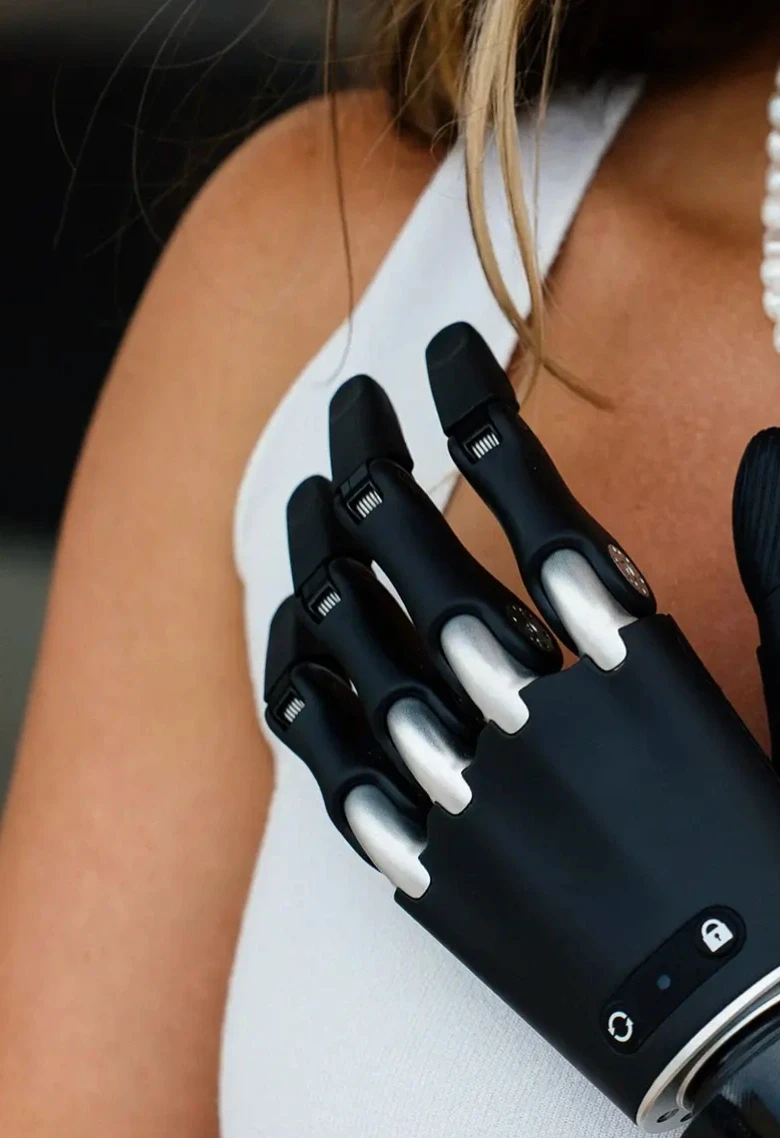
It's not just the software that gives a prosthetic hand its character; the way it is physically designed plays a big part too. For example, if a prosthetic hand has individually motorized fingers, then it can really adapt its grip to the shape of whatever you are holding, which is something that rigid single-motor designs just can't match.
How a Hand With Individual Finger Control Helps You Grasp Things
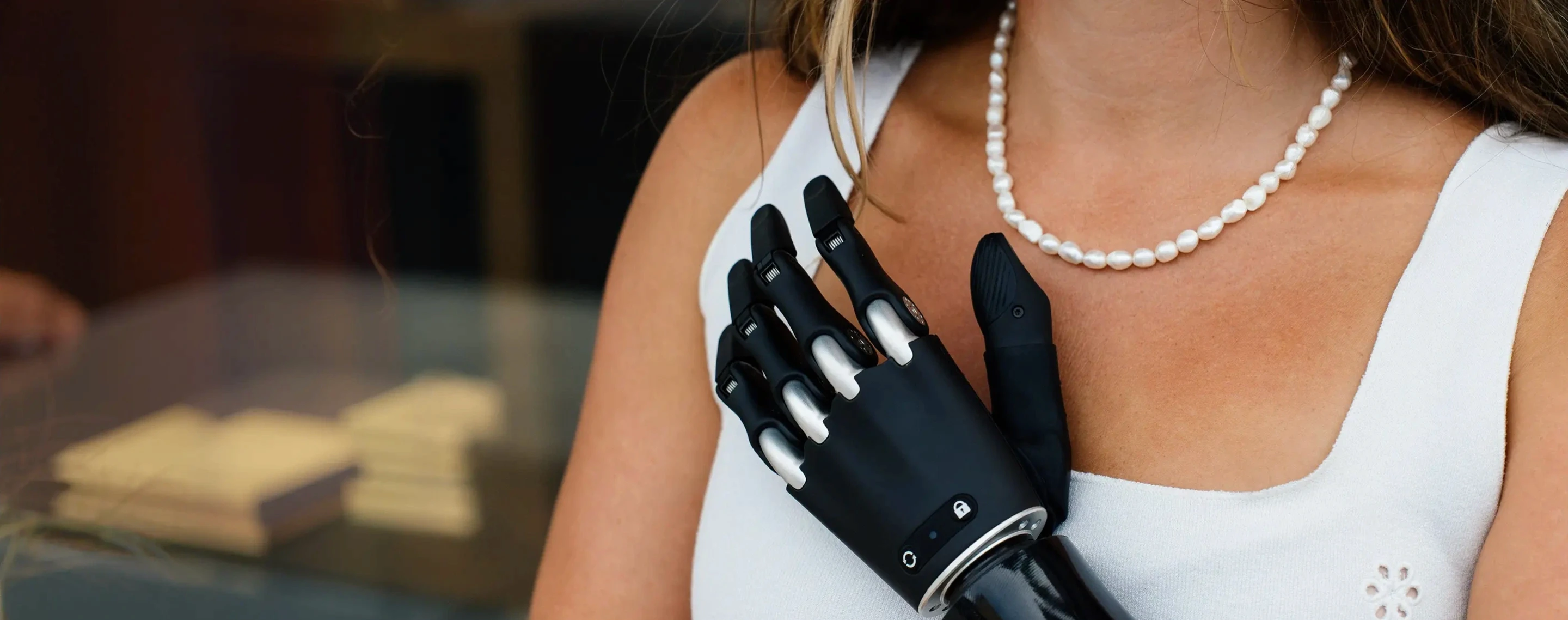
Each finger in a prosthetic hand with individual control can just stop moving when it hits a bit of resistance. The hand doesn't have to force a rigid grip, but can actually just mold itself around the thing you are trying to hold, which is what the Zeus hand does to get the maximum amount of contact and grip security.
When a Hand Can Wrap Around Really Odd Shapes
Having fingers that can move independently like this means that the hand can wrap around all sorts of irregular objects, handles, tools, or just things that are a bit peculiar, without having to apply too much pressure. Some prosthetics even have a bit of a rigid internal frame that is covered in a soft outer layer to make this kind of adaptability even easier.
By distributing the force evenly, the hand can hold things securely without the user having to spend all their time adjusting the grip or working out what to do next. It all makes everyday tasks a lot easier and a lot safer.
When Grip Force Is Controlled By Muscle Signals Just Like The Real Thing
Users are able to control the grip force by just adjusting their muscle signals, which can then translate into proportional finger movement and pressure. Because each finger can respond independently, the hand can apply just the right amount of force in just the right place.
This makes it a lot easier for the user to keep track of what is going on and to build up their confidence that the prosthetic will behave as they expect it to. Grasping feels much more predictable, so users can focus on getting things done rather than constantly having to think about the prosthetic.
How the Zeus Portfolio Balances Power and Sensitivity
But if a prosthetic hand is to be any good, it has to be able to balance power and sensitivity. The standard build of the Zeus hand delivers a high-output active grip force threshold of up to 152 Newtons (34.17 lbf) of constant pressure, pairing mechanical power with absolute speed by opening or closing fully in approximately 1.2 seconds.
For individuals requiring a lighter bionic hand performance, the compact variant generates a robust 120 Newtons of active grip force tailored for everyday agility, accelerating its full actuation time down to a remarkably fast 0.8 seconds.
When A Prosthetic Hand Is Friendly With Touchscreens
One useful feature of the Zeus Hand V2 is its touchscreen-compatible index finger. This allows users to interact with smartphones, elevator panels, and other touch-sensitive surfaces using their hands, without needing to remove the prosthetic or rely on a separate tool. For everyday use, that means simple digital tasks, like checking messages, navigating apps, or pressing touch-sensitive buttons, can feel more accessible and less disruptive.
Grip Patterns That Are Just Right For The Job
The Zeus hand portfolio is also really versatile in the way it can adapt to different grip patterns, making it a really useful tool for all sorts of different tasks. The system supports absolute functional versatility, featuring 14 predefined grip patterns alongside 10 user-configurable profiles that can be customized via the companion digital application to accommodate diverse lifestyle needs.
The standard build of the Zeus hand features a remarkable myoelectric prosthesis lifting capacity of up to 35 kilograms (77 pounds) when executing a functional hook grip posture to safely distribute heavy vertical loads.
FAQs
How do the fingers know when to stop closing?
Each finger operates via an independent motorized drive, allowing a digit to automatically stall the moment it encounters physical resistance. Instead of forcing an object into a rigid shape, the digits conform independently around the contours of an item to optimize surface contact and maximize grip stability.
What's going on with EMG signals when it comes to control?
There are sensors inside the socket that pick up on the electrical activity in your muscles. The software then translates that into movements for the fingers and even into the force they use. That means you can control your prosthetic in real time.
Can people with prosthetic hands use smartphones?
Yes, absolutely. The Zeus Hand V2 integrates a specialized Active Index digital feature that allows users to seamlessly navigate capacitive touchscreens on smartphones and tablets without needing any external modifications.
What mechanical boundaries define the vertical carrying limits of the hand?
The standard build of the Zeus hand safely accommodates a vertical lifting capacity of up to 35 kilograms (77 pounds) when utilizing a functional hook grip layout. For the compact model, the framework provides a vertical load capacity of up to 20 kilograms to reliably manage everyday carrying tasks.
How does individual control of each finger make a difference to grip confidence?
It lets the hand adapt to the shape of whatever it is you're trying to hold, which means you don't have to be constantly checking to make sure you've got a good grip; it just feels secure.
Bridging The Gap Between Users And Their World
Researchers are working hard to get prosthetic hands to be able to feel and interact with objects better. We're not quite up to replicating the exact sensations of human skin, but we're getting close with prosthetic limbs that combine clever design with some really smart signal processing.
It's features like finger motors that adapt to what you're doing, and the fact that they work with touchscreens, that kind of thing is really making a difference in the real world for people.
Proportional control architectures, closed-loop motor stalling, and customizable grip selections combine to ensure the artificial limb acts as a predictable, highly responsive extension of the user. That's basically going to help people engage with things more confidently in the real world.
Take a look at the latest innovations in upper-limb prosthetics and learn how these new ideas can really make a difference to your daily life by helping you get back in touch with your surroundings.
Contact Aether Biomedical to see how our technology can tailor itself to fit your needs.

Read On
See Zeus in action across clinical settings worldwide